Total Cost Analysis of Dual Color LSR Electronic Atomizer Seals
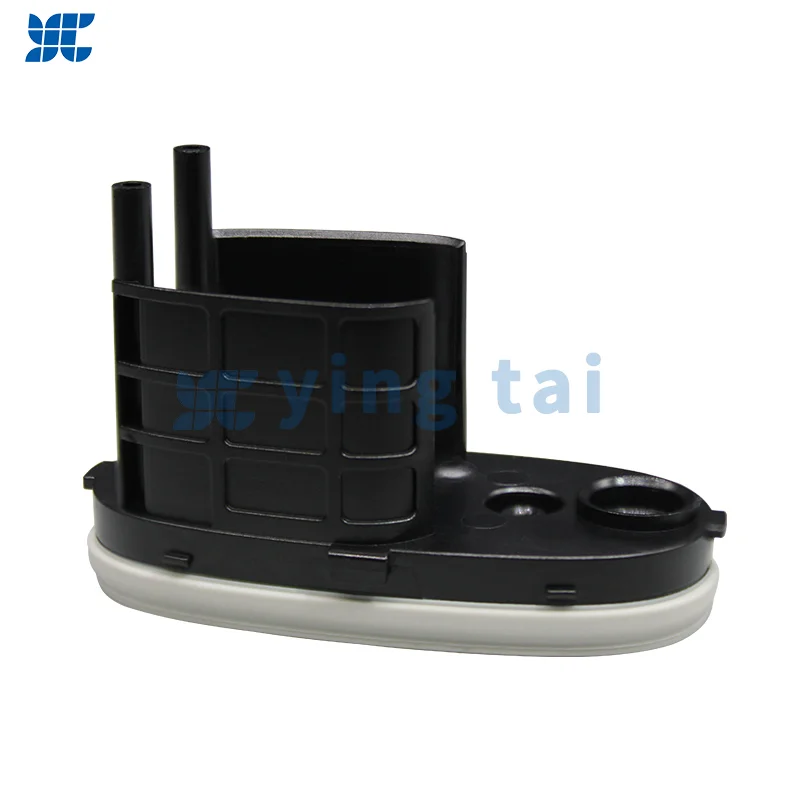
Evaluating component economics for miniature electronic atomizer hardware requires balancing upfront mold investments against recurring assembly labor costs. Model YT-021345 integrates liquid silicone and plastic into a precision-engineered sealing solution, shifting financial analysis away from isolated piece-part pricing. OEM/ODM hardware design engineers and sourcing managers must weigh the initial capital expenditure of dual-color tooling against the downstream efficiency gains achieved on the production line.
Procurement teams frequently encounter budget trade-offs between raw material expenses and total yield optimization. Production workflows benefit directly from components that eliminate secondary bonding steps.
Dimensional Specifications and Material Composition of Model YT-021345
Physical Specifications and Dimensional Baseline of Model YT-021345
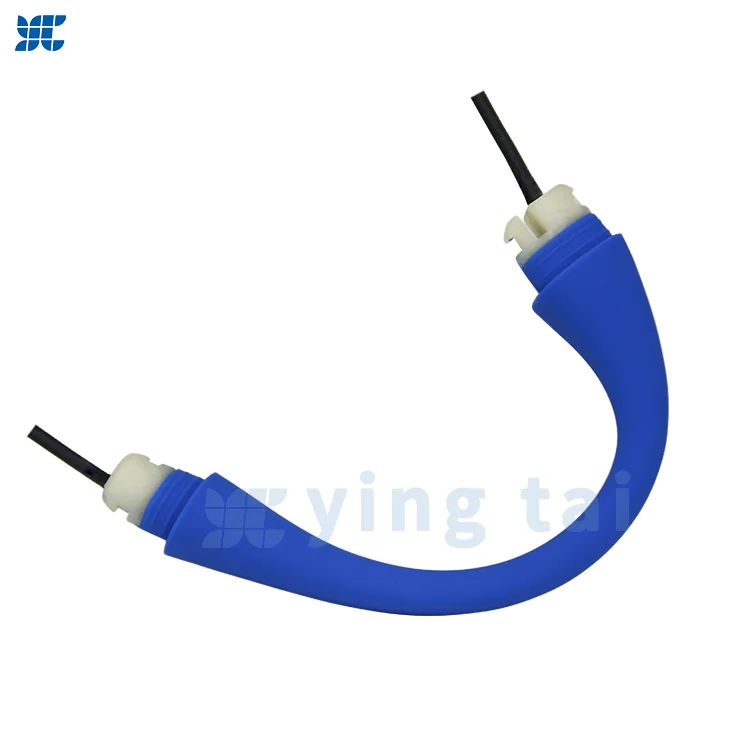
Model YT-021345 establishes its foundational structure through a dual-component design combining liquid silicone and plastic materials. Precision engineering demands strict adherence to defined geometries across every production batch. Sourcing managers evaluate these physical parameters before committing to high-volume manufacturing runs.
Dimensional Parameters and Tolerances
Every physical dimension incorporates a strict tolerance band of ± 0.5mm to ensure reliable integration into downstream hardware assemblies. The component features a total length of 43 ± 0.5mm paired with a total width of 20 ± 0.5mm. Additional spatial constraints include a total height of 28 ± 0.5mm and a total diameter of 15 ± 0.5mm.
Component cross-sections are further defined by a width of 10 ± 0.5mm, a height of 8 ± 0.5mm, and a diameter of 8 ± 0.5mm. These exact measurements govern cavity design in tooling manufacturing. Variations outside these specified ranges require formal validation by the supplier prior to production sign-off.
Material Distribution Architecture
| Material | Model | Size | Compliance Documentation |
|---|---|---|---|
| Liquid silicone, plastic | YT-021345 | Width: 10 ± 0.5mm Height: 8 ± 0.5mm Diameter: 8 ± 0.5mm Total diameter: 15 ± 0.5mm Total length: 43 ± 0.5mm Total width: 20 ± 0.5mm Total height: 28 ± 0.5mm |
Documentation availability to be confirmed with supplier |
The interface between the liquid silicone and the plastic substrate creates a cohesive sealing boundary. Material distribution ratios are governed by the dual-color injection molding process rather than secondary gluing operations. Engineering teams verify these structural boundaries to prevent mechanical displacement during thermal expansion cycles.
Open Market Cost Analysis for Liquid Silicone Rubber Raw Materials
Material Pricing Contrasts in Miniature Components
| Material Classification | Price Tier | Processing Complexity | Primary Application Boundary | | :--- | :--- | :--- | :--- | | Liquid Silicone Rubber | Premium tier | Automated injection molding | Precision micro-sealing components | | Standard Solid Silicone | Moderate tier | Compression or transfer molding | High-volume low-tolerance gaskets | | Thermoplastic Elastomers | Economy tier | Conventional thermoplastic extrusion | General-purpose flexible housings | Thermoplastic elastomers provide lower initial pellet expenses on the open market, but their thermal stability limits deployment in high-temperature micro-atomizer assemblies. Standard solid silicone alternatives require high-temperature vulcanization presses and separate manual positioning steps, offsetting their lower raw material price through increased labor requirements.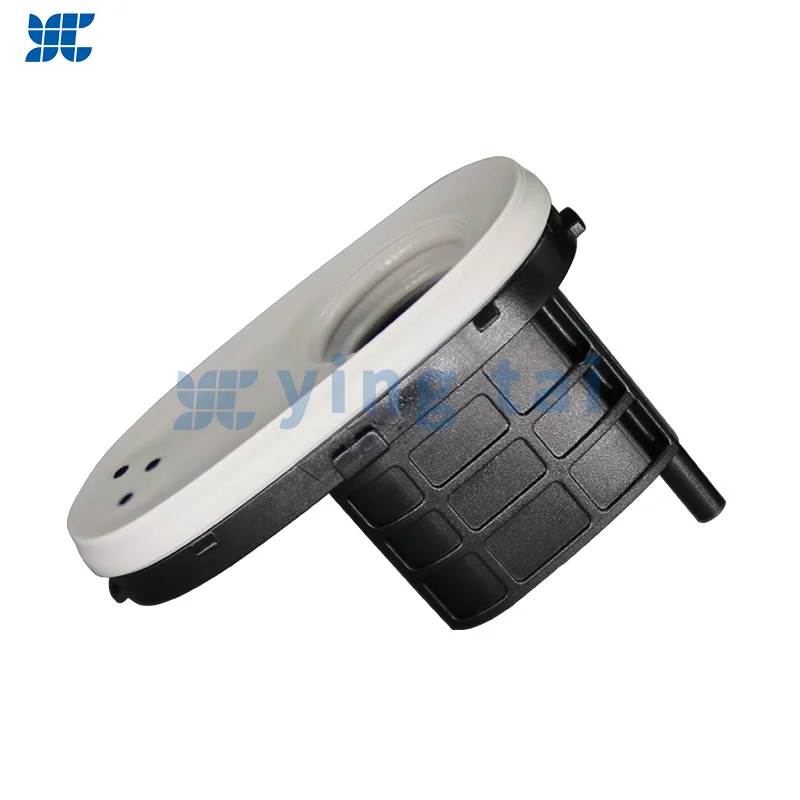
Initial Piece-Part Material Budget Impact
Base polymer pricing dictates the initial piece-part material budget for electronic atomizers. Premium material grades shift early financial projections upward, requiring engineering teams to evaluate lifecycle durability against initial feedstock outlays. Material performance characteristics under operating conditions are governed by structural design parameters rather than raw resin costs alone.Initial Capital Expenditure and Tooling Amortization for Dual-Color Molds
Capital Expenditure Impact of Dual-Color Injection Mold Tooling
Initial capital expenditure for dual-color injection molds exceeds the baseline investment required for traditional single-shot tooling. Multiple steel cavities, complex rotary core mechanisms, and precision alignment tolerances elevate upfront tooling costs before production begins.
Single-shot injection molds demand simpler machining processes and lower entry costs. However, parts produced from single-shot methods require subsequent secondary bonding operations to achieve waterproof sealing configurations. Dual-color injection molds integrate liquid silicone and plastic during a single manufacturing cycle, shifting financial requirements from recurring labor to upfront capital investment.
Tooling amortization dictates financial viability during early product budgeting stages. High initial mold costs distribute across projected production volumes over the component lifecycle. Low-volume manufacturing runs encounter heavier per-unit tooling amortization burdens, whereas high-volume scaling reduces per-unit capital impact.
Multi-Material Mold Fabrication and Economic Forecasts
Fabrication expenses for multi-material tooling depend heavily on the complexity of the sliding mechanisms and shut-off surfaces required to separate liquid silicone from the plastic substrate. Tooling investments scale upward when tighter tolerance bands apply to micro-scaled geometries.
| Tooling Type | Price Tier | Evaluation Basis |
|---|---|---|
| Dual-Color Injection Mold | High initial capital expenditure | Determined by production volume and material flow requirements |
| Single-Shot Injection Mold | Lower initial capital expenditure | Dependent on secondary bonding and labor costs |
Amortization calculations rely on projected annual usage volumes. Financial planning incorporates upfront tooling outlays alongside raw material expenses to determine true production feasibility.
Labor Optimization Through Integrated Dual-Color LSR Overmolding
Traditional Assembly Constraints in High-Volume Miniature Electronics
Manual alignment of gaskets and auxiliary housings on miniature production lines introduces mechanical positioning errors. Workers handling separate sealing elements increase cycle duration while lowering overall output consistency during multi-step integration sequences.
Traditional manufacturing workflows require adhesive application or mechanical fasteners to secure individual elastomer rings inside the housing cavity. These intermediate handling operations expand total labor hours per unit when manufacturing volumes scale upward.
Streamlining Production Through Integrated Component Geometries
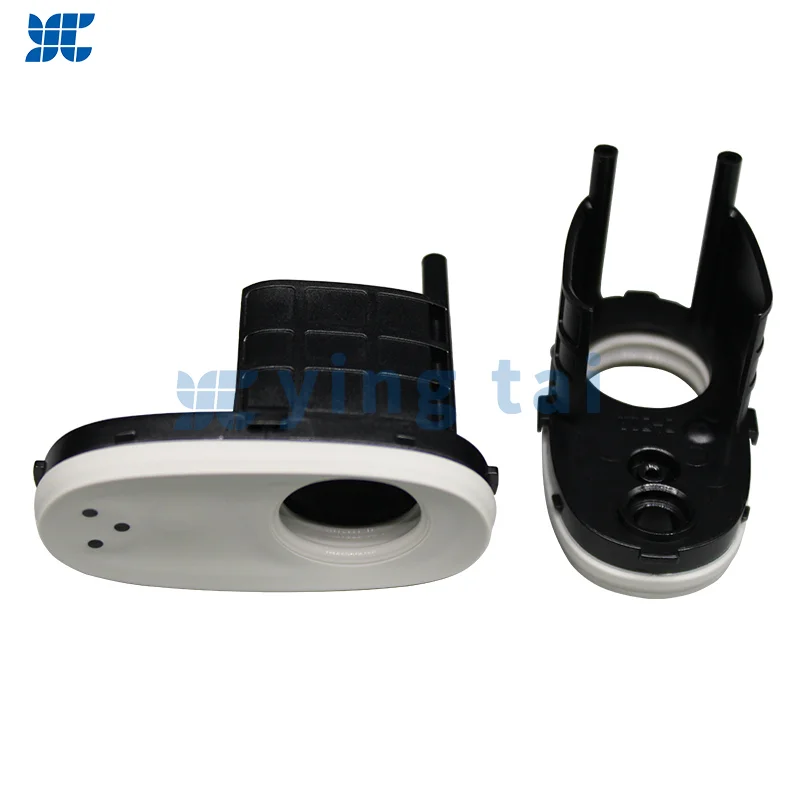
Model YT-021345 connects the sealing boundary directly to the rigid substrate during the primary injection sequence. This integrated architecture removes secondary bonding steps by fusing the elastomer element straight to the supporting structure.
Production facilities bypass manual seal insertion tasks entirely because the overmolded boundary stays mechanically locked in place. Assembly line workers transfer the consolidated component straight into final enclosures without adjusting loose elastomer rings.
Quantifying Labor Efficiency and Workstation Throughput
Consolidating multi-part assembly tasks into a single-part component reduces direct operator intervention on the factory floor. Hourly throughput velocity rises as workstation bottlenecks shift away from manual gasket placement.
Labor intensity decreases proportionally with batch sizing as repetitive insertion steps disappear from standard operating procedures. Actual cost reductions depend heavily on batch volume parameters and local wage rates.
| Model | Material | Size | Assembly Workflow Impact |
|---|---|---|---|
| YT-021345 | Liquid silicone, plastic | Width: 10 ± 0.5mm Height: 8 ± 0.5mm Diameter: 8 ± 0.5mm Total diameter: 15 ± 0.5mm Total length: 43 ± 0.5mm Total width: 20 ± 0.5mm Total height: 28 ± 0.5mm |
Eliminates secondary bonding and manual insertion steps |
| Alternative Design | Standard solid silicone | Varies by supplier specification | Requires manual gasket alignment and auxiliary fasteners |
Evaluating Total Cost of Ownership Beyond Piece-Part Unit Price
Holistic Cost Model Architecture
Financial evaluations shifting from isolated piece-part purchase prices to comprehensive Total Cost of Ownership models capture expenses spanning from raw material acquisition to downstream assembly labor. Single-material strategies often appear economical on initial invoice lines but conceal downstream expenses driven by manual component insertion and secondary sealing steps. Procurement expenditures for hardware depend directly on production volume and regional logistics variables rather than baseline unit prices alone.
Integrating Capital Expenditures with Operational Overhead
Calculating overall economic impact requires summing raw material costs, initial mold tooling investments, and recurring conveyor line labor hours. Alternative manufacturing methods that rely on separate plastic bases and manual rubber gasket assembly introduce high piece-part handling costs that compound across multi-shift production runs. Total financial forecasting incorporates mold longevity and scrap reduction metrics to establish a true per-unit cost boundary.
Spatial layout requirements for automated pick-and-place equipment on the factory floor are influenced by specific component profiles. Tighter sealing interfaces reduce rework rates by preventing fluid migration without demanding expensive manual inspection checks. Production planning teams balance higher upfront tooling investments against sustained reductions in daily operational friction.
Comparative Framework for Sourcing Strategies
Sourcing managers evaluating alternative component options utilize structured financial matrices to contrast single-material plastic parts against multi-material configurations. Decision models weigh the variable cost of raw materials against the fixed amortization schedule of multi-cavity injection molds. Project budgets reflect these trade-offs based on targeted annual production quantities and final product delivery schedules.
Component pricing variations depend heavily on raw material grade selection, annual order volumes, and destination port logistics. Supply chain teams calculate breakeven points by measuring total labor hours saved on the assembly line against the initial capital expenditure allocated for tooling fabrication. Certification availability is to be confirmed with the supplier.
Strategic Sourcing Decisions for Miniature Electronic Atomizer Seals
Procuring micro-sealing components requires balancing initial capital outlays against downstream operational efficiencies across projected production volumes.
Model YT-021345 demonstrates that higher upfront raw material and dual-color mold investments offset subsequent manual handling and alignment expenses on high-speed assembly lines. Manufacturing enterprises achieve predictable unit economics when component reliability prevents post-assembly leakage and rejects.
Preliminary Component Cost Structure Evaluation
Engineering teams analyze specific variables before freezing miniature component designs for full-scale production. Raw material grade selection directly impacts baseline material budgets, while dual-color mold amortization curves shift depending on projected annual volumes and machine hour rates.
Assembly line throughput metrics determine whether integrated overmolding delivers a lower net cost per functional unit than multi-piece bonded alternatives.
| Evaluation Metric | Single-Material Component Approach | Model YT-021345 Dual-Color Overmolded Approach |
|---|---|---|
| Initial Tooling Investment | Lower upfront expenditure for single-shot injection molds | Higher initial capital outlay for dual-color tooling |
| Secondary Assembly Operations | Requires manual alignment and adhesive bonding steps | Eliminates secondary bonding through integrated overmolding |
| Material Selection Strategy | Relies on standard solid silicone or thermoplastics | Utilizes liquid silicone and plastic specified in Model YT-021345 |
Compliance and Documentation Verification Protocols
Technical stakeholders review material declarations and quality documentation prior to scaling component procurement. Verification schedules depend on destination port requirements, end-use regulatory frameworks, and custom order volumes negotiated with the manufacturing partner.
Procurement teams coordinate technical audits to ensure incoming batches adhere to dimensional tolerances, maintaining a total length of 43 ± 0.5mm and a total width of 20 ± 0.5mm across every delivery.
Frequently Asked Questions
Model YT-021345 measures a total length of 43 ± 0.5mm, a total width of 20 ± 0.5mm, and a total height of 28 ± 0.5mm. Design engineers must factor in these precise physical tolerances during housing integration, with exact variations dependent on final production batch specifications.
Open market procurement for liquid silicone rubber typically requires a higher initial financial allocation compared to standard solid elastomers or alternative thermoplastics. Sourcing managers must balance this higher baseline polymer cost against downstream manufacturing efficiencies.
Integrated dual-color overmolding bonds the silicone wrapper directly to the plastic base during injection, which entirely removes manual seal insertion and secondary gluing steps. This structural integration significantly lowers assembly line labor intensity and associated operational overhead.
Holistic cost modeling requires incorporating raw material expenses, initial tooling amortization, and assembly labor efficiency gains into a unified economic assessment. Sourcing managers evaluate these combined variables to determine true component value rather than relying on isolated unit pricing.
Technical stakeholders must review dimensional stability, thermal expansion boundaries, and material compatibility during preliminary evaluations. Final feasibility depends heavily on specific order quantities, designated port destinations, and supplier-provided documentation verification.
Conclusion
Comprehensive cost modeling for model YT-021345 requires aligning annual volume forecasts with dual-color tooling amortization schedules. Procurement teams mapping their purchasing scale against initial capital outlays determine financial viability based on specific destination ports and batch sizes.
Sourcing managers are advised to initiate formal cost-breakdown consultations to evaluate exact pricing tiers. Quantitative projections submitted directly to the manufacturing partner establish precise unit economics without relying on standardized estimations.