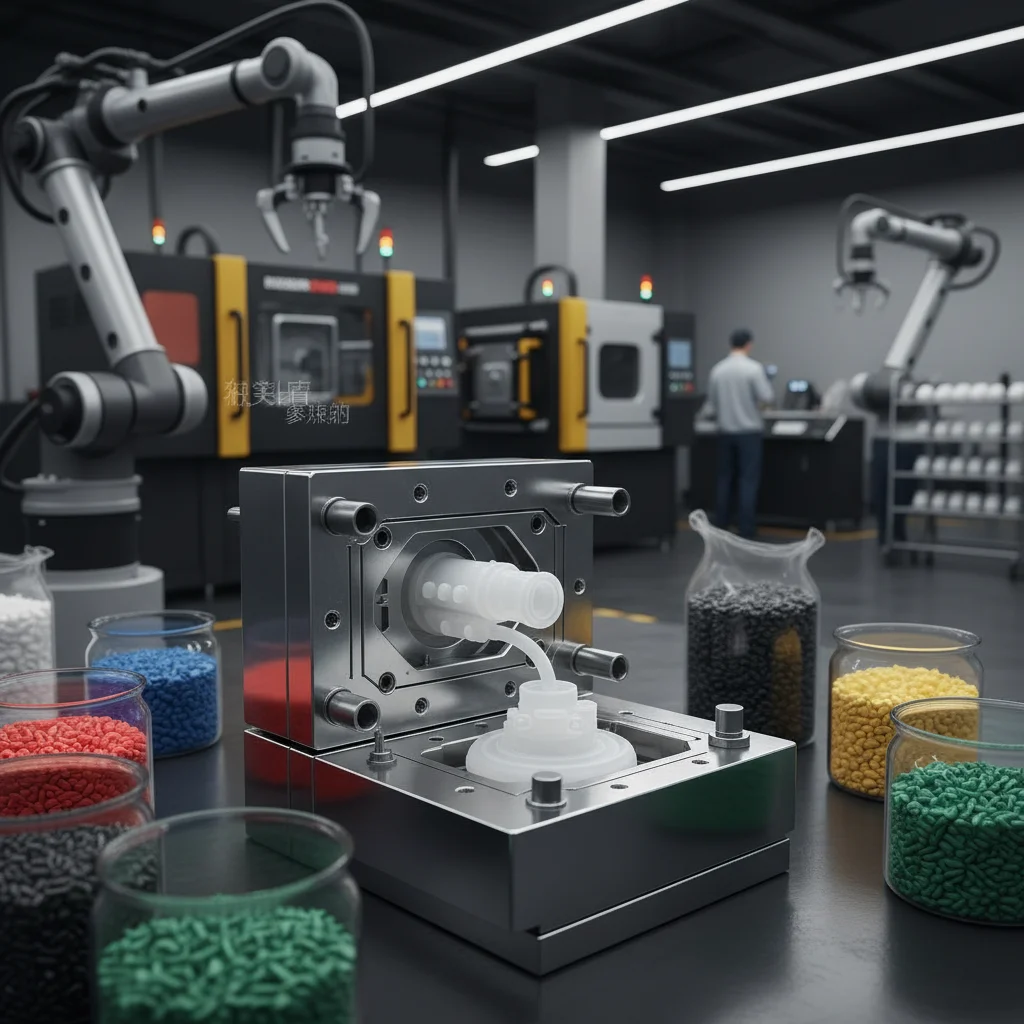
The precision of an injection mould is the cornerstone of modern high-performance manufacturing, particularly when integrating disparate materials to achieve specific tactile and structural goals. In the realm of electronic accessories, the ability to merge rigid plastics with soft-touch elastomers through advanced tooling allows for products that are both durable and ergonomically superior.
Globally, the demand for sophisticated molding solutions has surged as consumer electronics evolve toward more integrated, seamless designs. The challenge lies in maintaining tight tolerances—often within fractions of a millimeter—while ensuring that the bond between liquid silicone and plastic remains permanent and leak-proof under various environmental stresses.
By utilizing a high-quality Injection mould, manufacturers can produce complex components like the YT-021305-1 magnetic power bank shell, which requires a precise liquid silicone wrap over a plastic core to ensure both protection and a premium hand-feel.
The YT-021305-1 model represents a sophisticated approach to accessory housing, featuring a power bank case with dimensions of 130 ± 0.5mm in length, 68 ± 0.5mm in width, and 7 ± 0.5mm in height. This level of precision is achieved through a specialized Injection mould designed to handle the dual-material process of liquid silicone wrapped in plastic.
To ensure a consistent aesthetic and tactile experience, the liquid silicone film thickness is maintained at 0.5 ± 0.5mm. The resulting shell is lightweight, weighing only 16g, while the mold itself is constructed from high-grade metal, steel, or aluminum alloys to ensure longevity and repeatability across thousands of production cycles.
The integration of liquid silicone and plastic is not merely an aesthetic choice but a functional necessity for modern electronic shells. By wrapping a rigid plastic core with a soft silicone exterior, the product gains significant impact resistance and a non-slip grip, which are essential for portable power banks used in fast-paced environments.
This process requires a highly specialized tool capable of managing two different thermal expansion coefficients. If the cooling rate of the plastic core and the curing rate of the silicone are not perfectly synchronized within the mold, the final product may suffer from warping or delamination, compromising the 0.5mm film thickness.
Furthermore, the versatility of the material allows for extensive customization. From standard professional tones like black, white, and gray to vibrant red and blue, the material synergy ensures that colors remain vivid and resistant to fading, providing a premium look that aligns with high-end brand standards.
Overmolding is a complex process where a second material is molded over a previously molded part. In the case of the YT-021305-1, the Injection mould must be engineered to hold the plastic insert securely while the liquid silicone is injected under high pressure to create a seamless bond.
The critical challenge in this process is achieving the ± 0.5mm tolerance across all dimensions. This requires the use of precision-machined steel or aluminum alloys that can withstand repeated thermal cycling without degrading, ensuring that every power bank case produced is identical in size and weight.
By optimizing the gate locations and venting within the tool, engineers can eliminate air traps and sink marks. This ensures that the 16g shell remains lightweight yet structurally sound, providing the necessary protection for the internal magnetic components of the power bank.
Selecting the right metal for the tooling is a balance between production volume, budget, and required precision. While aluminum alloys offer faster heat dissipation and lower initial costs, hardened steel is preferred for high-volume runs where wear resistance is paramount to maintain the tight tolerances of the silicone film.
The choice of material directly impacts the cycle time and the overall surface finish of the final product. For high-end electronic shells, a polished steel surface within the Injection mould is essential to achieve the smooth, premium texture expected by the end consumer.
Liquid Silicone Rubber (LSR) overmolding has transcended simple consumer electronics, finding critical use in the medical and automotive sectors. In medical device manufacturing, the ability to create a seamless, biocompatible seal around plastic components is vital for preventing bacterial growth and ensuring sterile environments.
In the automotive industry, this technology is used for high-performance gaskets and interior touch-points. The same precision used in a power bank Injection mould is applied to create weather-resistant seals that can withstand extreme temperature fluctuations without cracking or losing their seal.
Maintaining a tolerance of ± 0.5mm requires a rigorous quality control protocol that begins with the dimensional drawings. Every stage of the production process, from the CNC machining of the mold to the final injection of the silicone, is monitored to ensure that the power bank case dimensions remain constant.
Advanced measurement tools, such as CMM (Coordinate Measuring Machines), are employed to verify the thickness of the silicone film. Any deviation from the 0.5mm specification can lead to an inconsistent feel or failure in the fit-and-finish of the power bank assembly.
Furthermore, the weight of the shell is a key indicator of quality. A consistent 16g weight confirms that there are no internal voids or excess material, which would indicate a failure in the Injection mould pressure settings or venting efficiency.
Industrial customization begins with the ability to adapt tools based on specific drawings and samples. Whether a client requires a specific color palette—such as custom gray or deep blue—or a modification in the shell's thickness, the mold design must be flexible enough to accommodate these changes without sacrificing structural integrity.
The transition from a prototype to a mass-production tool involves an iterative process of sampling and refinement. By using a modular Injection mould design, manufacturers can quickly swap inserts to change the product's external features while keeping the core mechanism identical.
Ultimately, the goal of customization is to provide a product that is tailored to the end-user's needs while maintaining the cost-efficiencies of automated production. This approach allows brands to launch diverse product lines with minimal downtime and maximum consistency.
| Customization Variable | Impact on Lead Time | Cost Influence | Technical Complexity |
|---|---|---|---|
| Color Change (Black/White/Red) | Low | Minimal | Low |
| Dimension Adjustment (±0.5mm) | Medium | Moderate | Medium |
| Silicone Film Thickness Mod | Medium | Moderate | High |
| Mold Material Upgrade (Steel) | High | High | Medium |
| Custom Logo Embossing | Low | Low | Medium |
| Material Hybridization (LSR+PC) | High | High | Very High |
The primary advantage is the combination of a soft, ergonomic grip and enhanced shock absorption. While the plastic core provides structural rigidity, the liquid silicone wrap protects the device from impact and prevents it from slipping, which is critical for portable electronics.
This precision is achieved through the use of high-grade CNC machining of the mold cavities and the strict control of injection pressure and cooling temperatures. Using a professional Injection mould ensures that the material shrinks uniformly during the curing process.
Yes. For low-volume prototyping or short runs, aluminum alloys are often used due to their lower cost and faster machining time. For mass production, hardened steel is recommended to prevent mold wear and ensure consistent quality over millions of cycles.
Absolutely. The liquid silicone can be customized into various colors, including black, white, gray, red, and blue. Since the coloring happens at the material level before injection, the color is integrated throughout the film, ensuring it doesn't peel or wear off.
It refers to a two-shot or overmolding process. First, a rigid plastic shell is molded. This shell is then placed into a second mold where liquid silicone is injected around it, creating a permanent, chemical bond between the two materials.
The most effective way is to provide detailed 2D or 3D dimensional drawings (CAD files) and physical samples. This allows the engineering team to determine the optimal gate locations and material choices for the Injection mould.
The production of high-precision components like the YT-021305-1 magnetic power bank shell demonstrates the critical intersection of material science and tooling engineering. By mastering the overmolding of liquid silicone onto plastic, manufacturers can achieve a perfect balance of durability, weight (16g), and ergonomic appeal, all while maintaining strict dimensional tolerances.
Looking forward, the evolution of Injection mould technology will likely move toward even more sustainable materials and automated quality monitoring. For businesses seeking to elevate their product quality, investing in precision-engineered tooling is the most reliable path to achieving market-leading durability and consumer trust. Visit our website: www.ytlsrmold.com