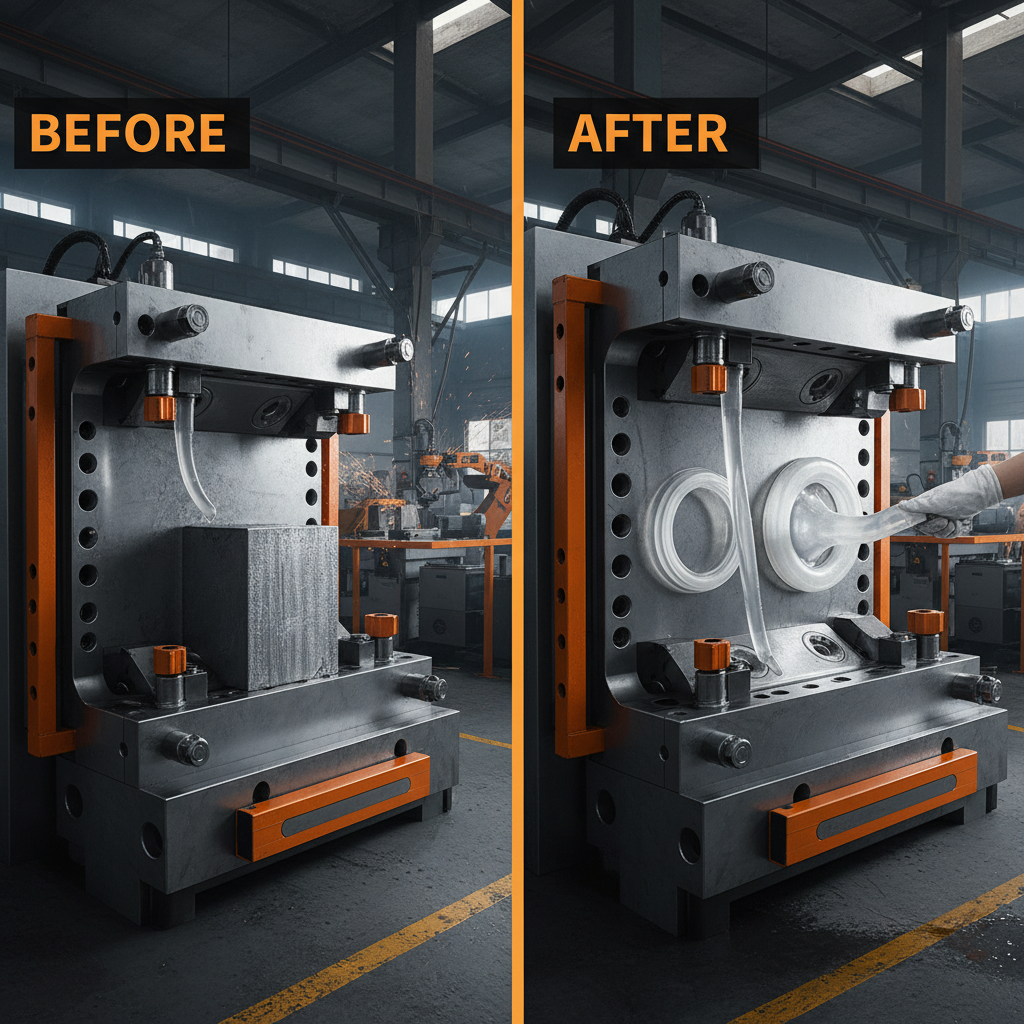

Precision liquid silicone rubber (LSR) molding is a cornerstone of modern high-end manufacturing, enabling the production of complex, biocompatible, and thermally stable components. Achieving the desired part geometry and material consistency depends entirely on the quality of the Customized molds for precision liquid silicone parts processing, which must account for the unique rheological properties of liquid elastomers.
In industries ranging from consumer electronics to new energy vehicles, the demand for high-consistency seals and encapsulated parts has increased. Engineers face significant challenges in managing mold shrinkage, air entrapment, and flash control. This requires a sophisticated approach to tool design, where the intersection of mechanical precision and material science determines the final product's performance in harsh operational environments.
This guide provides a technical analysis of the mold development process, exploring the critical factors that influence part accuracy and production efficiency. Readers will gain insights into material selection, thermal optimization, and the specific capabilities required from a manufacturing partner to ensure that customized tooling translates into scalable, high-quality production of elastomer components.
Precision Tooling for Elastomer Components
The manufacturing of liquid silicone parts differs fundamentally from traditional thermoplastic injection. Because Customized molds for precision liquid silicone parts processing handle materials with very low viscosity, the tools must be engineered with extremely tight sealing gaps to prevent leakage, known as "flash." Unlike plastics, LSR is typically cured via heat, meaning the mold acts as both the shaping tool and the chemical reactor. This dual role requires high-grade tool steels capable of resisting corrosion from silicone byproducts while maintaining dimensional stability under repeated thermal cycling. Furthermore, the integration of automatic injection systems—such as the 55 sets of liquid silicone molding machines utilized by Guangdong Yingtai High Precision Technology—demands that molds be perfectly aligned with machine platens to ensure uniform pressure distribution across the cavity. The transition from a 2D drawing to a finished, high-precision part involves rigorous calculation of shrinkage rates, which vary based on the specific silicone grade and curing temperature, making expert tool customization an absolute necessity for B2B procurement.
Engineering Guidance for LSR Mold Customization
Developing a high-performance mold for LSR requires a systemic approach that balances fluid dynamics, thermal transfer, and mechanical tolerances. The following analysis breaks down the seven core dimensions of the tooling process to help engineers and procurement officers evaluate technical requirements.
Critical Design Parameters
Effective mold design starts with the optimization of gates and runners to ensure the material fills the cavity without creating weld lines or air pockets. For precision parts, the runner system must be balanced to ensure equal flow to all cavities, preventing weight variations between parts. This is especially critical for encapsulation components where the silicone must wrap perfectly around hardware or plastic inserts.
| Design Factor | Technical Requirement | Potential Risk | Buyer Checkpoint |
|---|---|---|---|
| Gate Position | Optimal flow path analysis | Air entrapment / Voids | Flow simulation reports |
| Ventilation | Precision micro-vents | Burn marks / Incomplete fill | Vent placement logic |
| Shrinkage Rate | Material-specific offsets | Dimensional inaccuracy | Shrinkage calculation data |
| Clamping Force | Calculated based on projection | Flash / Part leakage | Machine compatibility |
| Insert Alignment | High-precision guide pins | Off-center encapsulation | Alignment tolerance spec |
| Cooling Channels | Conformal cooling paths | Long cycle times / Warpage | Thermal map analysis |
Material Compatibility and Flow
LSR is characterized by its shear-thinning behavior. The mold must be designed to manage this viscosity change to prevent turbulence. When processing customized parts like the YT-021304 model, the interaction between the liquid silicone and the mold surface determines the ease of part release. Selecting a tool steel with the correct hardness and corrosion resistance prevents the mold from degrading over thousands of cycles, maintaining the integrity of the part's dimensions.
Thermal Management Strategies
Since LSR requires heat to cure, the mold must distribute temperature uniformly. Cold spots can lead to under-cured parts, while hotspots cause premature curing (scorch), blocking the flow. Advanced tooling incorporates precision-drilled heating and cooling channels. This ensures that the elastomer achieves a consistent cross-linking density throughout the entire volume of the part, which is vital for automotive and medical-grade seals.
Tolerance and Precision Control
For precision-engineered components, tolerances are often measured in microns. Achieving this requires high-end CNC machining and EDM (Electrical Discharge Machining) capabilities. A professional manufacturer leverages precision mold processing equipment to ensure that the mating surfaces of the mold halves are perfectly flush. Any misalignment leads to flash, which increases post-processing costs and reduces the quality of the final seal.
Surface Finish Requirements
The texture of the mold cavity directly transfers to the silicone part. Whether the requirement is a mirror-polish for optical clarity or a specific matte texture for grip, the tool must be finished accurately. Specialized polishing techniques are used to remove machining marks, ensuring that the part can be ejected without sticking or tearing, which is a common failure point in complex liquid silicone geometries.
Tooling Lifespan and Maintenance
B2B procurement must consider the total cost of ownership. A mold's lifespan is determined by the choice of steel and the quality of the heat treatment. Regular maintenance, such as cleaning residue from the vents and checking for wear on the parting lines, is essential. High-quality tooling is designed for easy disassembly, allowing for rapid cleaning and repair without compromising the alignment of the precision cavities.
Supplier Evaluation Criteria
When selecting a partner for tool development, buyers should look for integrated capabilities. A supplier that manages the entire chain—from mold development to finished product—reduces the risk of communication errors. Facilities equipped with advanced testing instruments and a professional technical team, like the 500-person workforce at Guangdong Yingtai, can better handle the complexities of multi-material overmolding and high-consistency elastomer production.
FAQ
What is the primary difference between LSR molds and standard plastic injection molds?
The primary difference lies in the material viscosity and the curing process. LSR is much thinner than molten plastic, requiring significantly tighter tolerances on the mold's parting line to prevent leakage (flash). Additionally, while plastic molds are primarily designed to cool the material, LSR molds must be heated to trigger the chemical vulcanization process, necessitating integrated heating systems.
How do you handle shrinkage in precision silicone mold design?
Shrinkage is managed by applying specific scaling factors to the mold cavity based on the material's data sheet and the intended curing temperature. Because different silicone grades shrink at different rates, engineers perform a calculation based on the part's volume and geometry. For high-precision parts, prototype molds are often used to verify these rates before the final production tool is hardened.
Which industries benefit most from customized LSR tooling?
Industries requiring high thermal stability, chemical resistance, and biocompatibility benefit most. This includes new energy vehicle (NEV) components for battery sealing, consumer electronics for waterproof enclosures, medical devices for patient-contact parts, and smart wearables. These sectors demand the high consistency and precision that only customized, high-end tooling can provide.
Can the same mold be used for different colors of liquid silicone?
Yes, the mold itself is independent of the colorant. However, different color masterbatches can slightly alter the viscosity or curing speed of the silicone. Therefore, process parameters like injection speed and curing time may need slight adjustments to ensure that the part quality remains consistent across different colors like black, white, or gray.
What should I look for in a precision mold manufacturer?
Buyers should prioritize manufacturers with an integrated supply chain, including in-house mold processing and testing. Look for a diverse machine park (e.g., a mix of automatic injection and hydraulic presses) and a proven track record in high-end customization. The ability to provide technical support from the drawing stage to final quality control is a key indicator of a reliable B2B partner.
How is the quality of the final LSR part verified?
Quality is verified through a combination of dimensional inspection using advanced testing instruments (such as CMM or projectors) and material testing. For waterproof seals, pressure leak tests are conducted. Visual inspection ensures the absence of flash, voids, or surface defects. High-precision manufacturers implement strict quality control protocols at every stage of the production cycle.
References and further reading
- Industrial Elastomer Processing Standards for Automotive Seals (ISO/TS)
- Guide to Liquid Silicone Rubber (LSR) Injection Molding Technology
- Principles of Thermal Vulcanization in Polymer Tooling
Related Articles