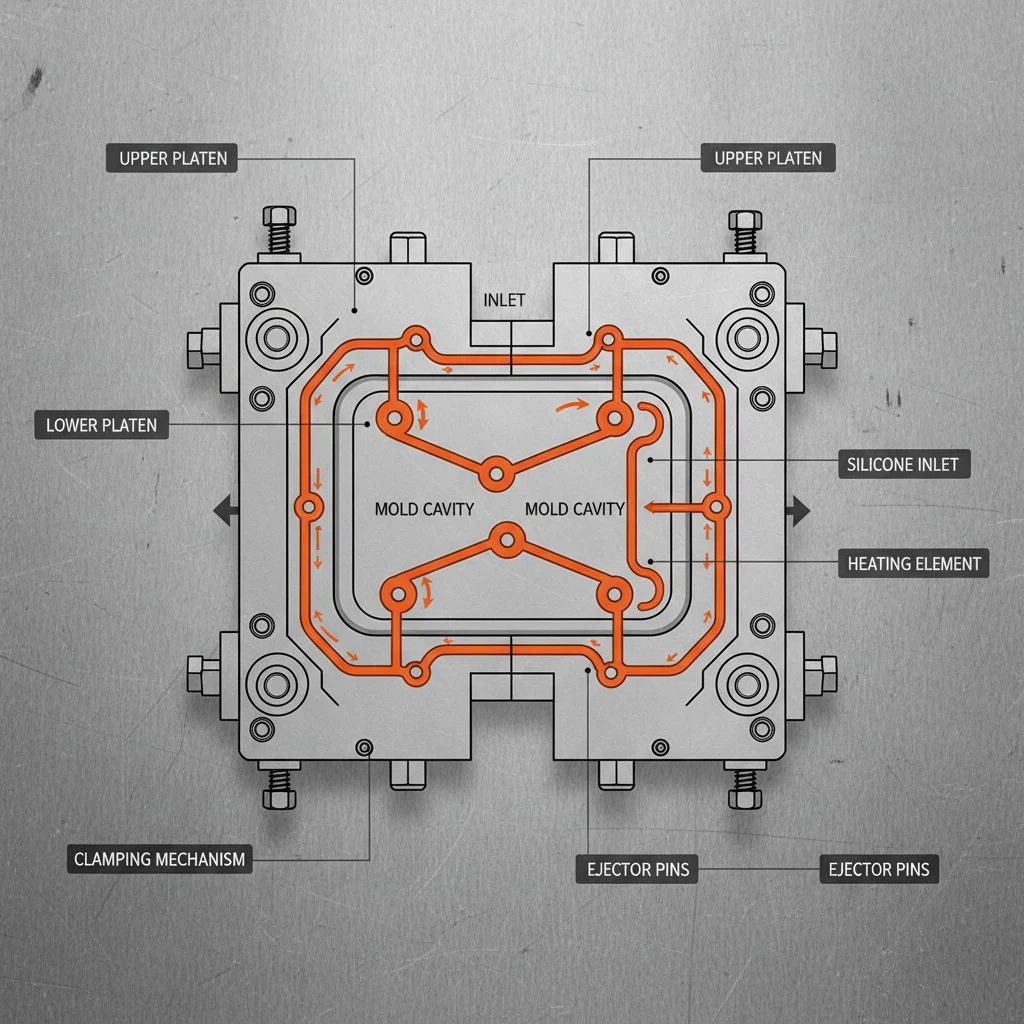
The integration of multi-material engineering has revolutionized how we approach the design of high-precision medical and industrial components. Among these advancements, the development of Two tone plastic parts stands out as a critical solution for products requiring both structural rigidity and soft-touch ergonomics. By combining disparate materials like rigid plastics and liquid silicone rubber (LSR), manufacturers can create seamless interfaces that enhance user safety and product longevity.
In the healthcare sector, the demand for biocompatible, durable, and comfortable interfaces has pushed the boundaries of overmolding technology. The ability to fuse a soft silicone layer onto a plastic substrate allows for the creation of specialized medical devices, such as nasal pillows, which must maintain a precise seal while remaining gentle on human skin. This synergy of materials ensures that the final product meets rigorous medical standards while providing the necessary mechanical support.
Understanding the nuances of producing high-quality Two tone plastic parts is essential for engineers and procurement specialists aiming to optimize performance and reduce assembly costs. From the precision of LSR overmolding to the selection of medical-grade polymers, every detail contributes to the efficacy of the finished product. This guide explores the technical depths and practical applications of these sophisticated components in today's manufacturing landscape.

Global Relevance of Two tone plastic parts
On a global scale, the shift toward personalized healthcare and ergonomic industrial design has increased the reliance on Two tone plastic parts. According to ISO standards for medical device biocompatibility, the interface between a device and the human body must be non-irritating and secure. This has led to a surge in the adoption of LSR (Liquid Silicone Rubber) overmolding, which allows for a rigid plastic core to be encapsulated in a soft, medical-grade silicone layer.
The challenge facing the industry has traditionally been the bonding strength between the plastic and the elastomer. Without a precise chemical or mechanical bond, these parts are prone to delamination, which can be catastrophic in medical applications like CPAP nasal pillows. Modern engineering now focuses on optimizing these bonds to ensure that the dual-material components can withstand repeated sterilization and daily wear and tear without failure.
Defining the Mechanics of Multi-Material Parts
In simple technical terms, Two tone plastic parts are components manufactured using two different materials—typically a rigid thermoplastic and a flexible elastomer—integrated into a single piece. This is most commonly achieved through an overmolding process where one material is molded first, and a second material is molded over it. In the case of the YT-021350 nasal pillow, this involves the strategic fusion of liquid silicone and plastic to achieve specific dimensional tolerances and tactile properties.
This approach is deeply connected to modern humanitarian and medical needs. For patients requiring long-term respiratory support, the "two-tone" nature of the part is not just aesthetic; it is functional. The rigid plastic provides the structural integrity needed to connect to the machine tubing, while the soft silicone ensures a comfortable, airtight seal against the nasal flare, preventing skin necrosis and improving patient compliance.
From a manufacturing perspective, this process eliminates the need for adhesives or mechanical fasteners, which are often points of failure and potential sources of contamination. By creating a monolithic structure from two distinct materials, manufacturers can produce parts that are more hygienic, easier to clean, and significantly more durable than traditionally assembled components.
Core Components of High-Precision Overmolding
The success of Two tone plastic parts depends on several critical factors. First is material compatibility; the plastic substrate must be chemically compatible with the LSR to ensure a strong bond. For a product like the nasal pillow (Model YT-021350), the choice of white liquid silicone provides the necessary purity and softness, while the plastic core ensures the part maintains its shape under pressure.
Precision tooling is the second pillar. The mold must be designed to handle the different shrinkage rates of the two materials. Because liquid silicone and rigid plastics cool and contract differently, the mold for Two tone plastic parts requires complex venting and precise temperature control to avoid warping or air pockets, ensuring dimensions like the 8mm inner diameter remain within a ±0.5mm tolerance.
Finally, the process of LSR overmolding is essential for scalability. Unlike traditional silicone casting, injection-molded LSR allows for rapid production cycles with extremely high consistency. This scalability ensures that thousands of identical nasal pillows can be produced with a consistent weight of approximately 8g, maintaining the strict quality standards required for medical certification.
Practical Applications in Medical Devices
The application of Two tone plastic parts is most evident in the production of respiratory interfaces. In the case of the nasal pillow, the design utilizes a rigid plastic connector (length 60mm) and a soft silicone tip (width 30mm). This hybrid construction allows the device to be firmly attached to a CPAP hose while the soft tip conforms to the user's anatomy, minimizing leakages and maximizing comfort.
Beyond respiratory care, these hybrid components are used globally in surgical tools and wearable health monitors. In remote industrial zones or post-disaster relief operations, the reliability of such parts is paramount. Devices that combine the strength of plastic with the sealing capabilities of silicone are less likely to fail in harsh environments, ensuring that critical medical interventions can be delivered without equipment malfunction.
Performance Metrics of Multi-Material Molding
Advantages and Long-Term Value
The primary advantage of utilizing Two tone plastic parts lies in the dramatic reduction of assembly time and the elimination of secondary processes. By molding the soft and hard components together, manufacturers remove the need for glue or screws, which not only lowers the cost per unit but also eliminates the risk of adhesive leaching—a critical concern for medical-grade products.
From a patient perspective, the value is found in the fusion of safety and dignity. A well-engineered nasal pillow provides a secure fit that doesn't require tight, irritating straps, allowing the user to feel more comfortable and less like a "patient." This emotional benefit, coupled with the logical benefit of a leak-proof seal, increases the long-term effectiveness of the medical treatment.
Future Trends in Hybrid Material Molding
The future of Two tone plastic parts is moving toward the integration of smart materials. We are seeing the emergence of conductive silicones and shape-memory plastics that can be overmolded into a single component. This would allow a nasal pillow to not only provide a seal but also sense the pressure levels or the fit of the device in real-time, transmitting data back to a healthcare provider.
Sustainability is also driving innovation. There is a growing trend toward using bio-based thermoplastics combined with recyclable LSR. The goal is to create a circular economy for medical disposables, where the two materials can be efficiently separated at the end of the product's lifecycle. This aligns with global green energy and waste reduction policies, ensuring that medical progress doesn't come at the cost of the environment.
Furthermore, the adoption of AI-driven mold design is reducing the trial-and-error phase of development. Simulation software can now predict exactly how the liquid silicone will flow around the plastic insert, allowing for the creation of more complex geometries with zero waste. This digital transformation is making the production of specialized Two tone plastic parts faster and more accessible for customized medical needs.
Overcoming Manufacturing Challenges
Despite the benefits, creating Two tone plastic parts presents challenges, most notably "flash" (excess material) at the parting line where the two materials meet. This is particularly problematic for nasal pillows, as flash can cause skin irritation. The solution lies in high-precision mold machining and the use of vacuum-assisted molding to ensure the silicone fills every cavity without leaking.
Another common issue is the "bond failure" where the silicone peels away from the plastic. Expert insights suggest the use of plasma treatment on the plastic substrate before overmolding. This increases the surface energy of the plastic, allowing the LSR to form a chemical bond at the molecular level, which is far superior to a simple mechanical lock.
Finally, maintaining tight tolerances across different materials requires a rigorous quality control system. By utilizing automated optical inspection (AOI), manufacturers can verify that every part meets the 8±0.5mm inner diameter and 15±0.5mm outer diameter specifications. This ensures that every unit delivered to the clinic is safe and effective.
Technical Analysis of Multi-Material Component Specifications
| Material Pair | Bonding Strength | Production Cycle | Medical Grade |
|---|
| LSR + PC (Polycarbonate) | High (9/10) | Fast | Yes |
| LSR + ABS | Medium (7/10) | Medium | Conditional |
| TPE + PP (Polypropylene) | High (8/10) | Very Fast | No |
| LSR + Nylon | Medium (6/10) | Slow | Yes |
| Silicone + TPU | Low (5/10) | Medium | Conditional |
| LSR + PEEK | Extreme (10/10) | Very Slow | Yes |
FAQS
LSR overmolding creates a seamless chemical bond between the soft silicone and the rigid plastic, eliminating the need for adhesives which can be toxic or degrade over time. This results in a more hygienic, leak-proof, and durable component that is safer for long-term patient use, particularly in devices like nasal pillows where a perfect seal is critical for therapy.
Accuracy is achieved through high-precision mold design and strict temperature control. Because different materials shrink at different rates, engineers use simulation software to adjust the mold dimensions. For example, the Model YT-021350 maintains an inner diameter of 8±0.5mm by utilizing precision-ground mold inserts and automated injection pressure monitoring.
Yes, these parts can be fully customized according to drawings and samples. Since the process relies on a mold, any changes to the length, width, or hardness of the silicone can be implemented by modifying the mold design. This allow manufacturers to create a variety of sizes to accommodate different nasal anatomies while maintaining the same production quality.
When produced using professional LSR overmolding and proper surface activation (such as plasma treatment), the bond is permanent and highly resistant to peeling. It is designed to withstand the stresses of daily use and medical sterilization processes, ensuring the two materials act as a single, monolithic unit throughout the product's lifespan.
By using medical-grade liquid silicone and biocompatible plastics, the risk of contamination is minimized. Unlike adhesives, which can contain volatile organic compounds (VOCs), LSR is chemically inert. Furthermore, the closed-loop injection process prevents external pollutants from entering the material stream during production.
In medical wearables, weight is a key factor for patient comfort. A part weighing approximately 8g, like the YT-021350, provides enough structural integrity to function without adding unnecessary bulk. This ensures that the device does not pull on the user's face, which reduces irritation and improves the overall experience of the therapy.
Conclusion
The development and implementation of Two tone plastic parts represent a pinnacle of modern material science, merging the strength of plastics with the versatility of liquid silicone. From the critical tolerances of the YT-021350 nasal pillow to the broader applications in healthcare and industrial design, these hybrid components solve the eternal conflict between rigidity and comfort. By eliminating assembly failures and improving biocompatibility, this technology ensures that end-users receive products that are not only functional but safe and ergonomic.
As we look toward the future, the integration of smart materials and sustainable polymers will further elevate the value of multi-material molding. For companies seeking to innovate in the medical or precision accessories field, investing in high-quality LSR overmolding is no longer an option but a necessity for staying competitive. We invite you to explore the possibilities of hybrid engineering to enhance your product's performance and user experience. Visit our website: www.ytplasticmold.com