In the landscape of modern high-precision manufacturing, the role of a Precision Liquid Silicone Parts Mold Factory has become indispensable. As industries transition toward materials that offer superior biocompatibility, thermal stability, and durability, liquid silicone rubber (LSR) has emerged as the gold standard for critical components in medical, automotive, and consumer electronics sectors.
Achieving the intricate geometries and tight tolerances required for these products demands more than just machinery; it requires a sophisticated synergy between material science and advanced mold engineering. A specialized Precision Liquid Silicone Parts Mold Factory bridges the gap between a conceptual design and a high-performance finished product, ensuring that every micron of the mold reflects the intended functionality.
Understanding the operational nuances of LSR molding—from vacuum degassing to precise thermal control—is essential for brands aiming to minimize waste and maximize product longevity. By partnering with a professional Precision Liquid Silicone Parts Mold Factory, manufacturers can leverage state-of-the-art injection molding and overmolding technologies to create products that are not only exquisite in appearance but flawless in performance.

Global Industry Context of Precision Liquid Silicone Parts Mold Factory
The global demand for high-performance elastomers has surged, driven by the stringent requirements of ISO 13485 and other international quality standards. A Precision Liquid Silicone Parts Mold Factory operates at the intersection of these standards, providing the critical infrastructure needed to produce medical-grade seals, wearable device gaskets, and complex industrial dampers that must perform without failure in extreme environments.
Historically, the challenge has been the "flash" and shrinkage associated with silicone molding. However, modern facilities have integrated CNC precision machining and EDM (Electrical Discharge Machining) to create molds with tolerances as tight as ±0.01mm. This evolution allows a Precision Liquid Silicone Parts Mold Factory to support the rapid scaling of "exquisite finished products" that were previously deemed too complex for mass production.
Defining the Precision Liquid Silicone Parts Mold Factory Concept
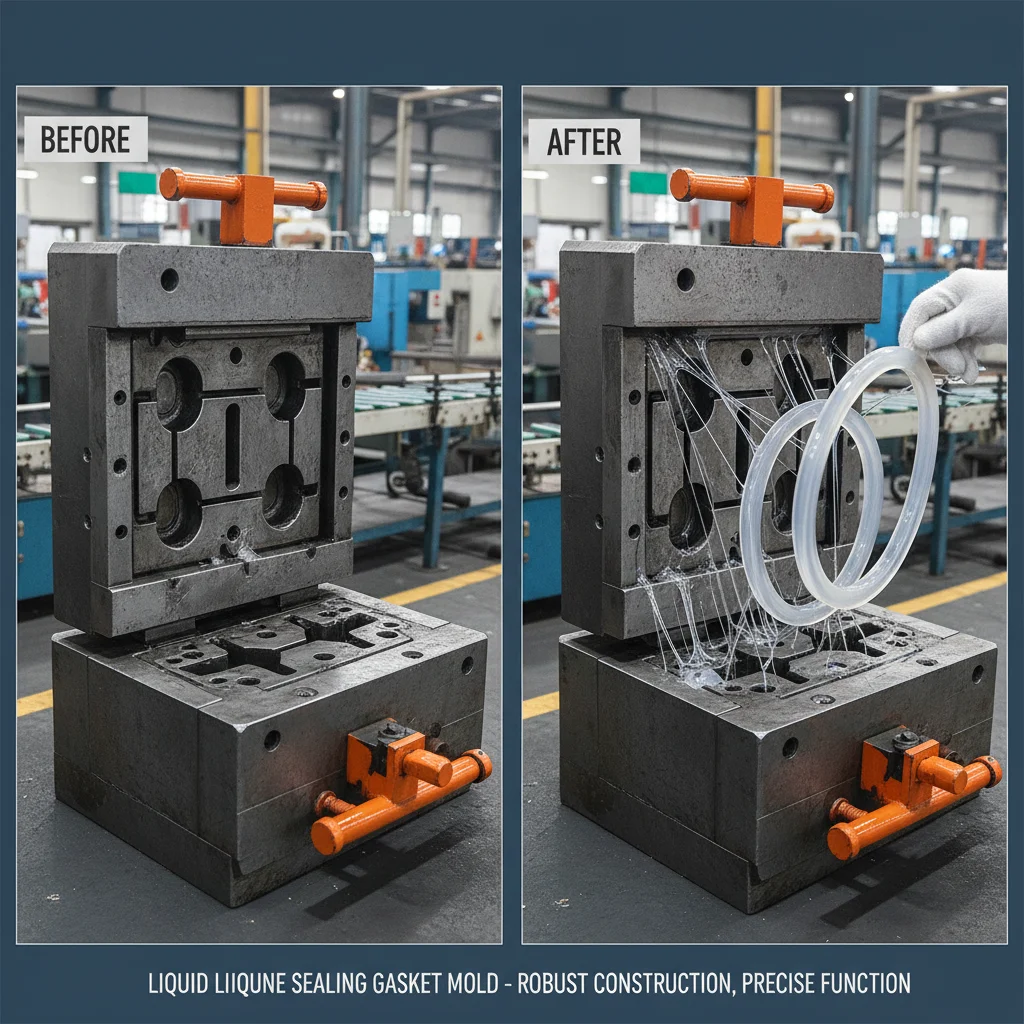
In simple terms, a Precision Liquid Silicone Parts Mold Factory is a specialized manufacturing hub that designs and produces the high-strength steel molds used to inject liquid silicone rubber (LSR). Unlike traditional compression molding, which is slower and less consistent, the liquid injection process utilized in these factories allows for high-volume production of parts with intricate internal geometries and superior surface finishes.
This concept is deeply connected to modern humanitarian and medical needs. For instance, the production of hypoallergenic breathing valves, infant feeding nipples, and surgical implants relies entirely on the hygiene and precision capabilities of a professional mold factory. By ensuring that the molds are free of contaminants and perfectly aligned, these factories directly contribute to patient safety and product reliability.
Beyond the medical field, the "Precision" element refers to the ability to handle LSR overmolding—where silicone is molded directly onto plastic or metal substrates. This process, mastered by a leading Precision Liquid Silicone Parts Mold Factory, enables the creation of seamless, waterproof, and ergonomic products such as the Intelligent Aromatherapy Comb, combining aesthetics with functional sealing.
Core Components for High-Precision LSR Molding
The success of a Precision Liquid Silicone Parts Mold Factory depends on several core technical pillars. First is Material Selection; using high-grade tool steel (like H13 or S136) ensures the mold can withstand thousands of cycles without warping, maintaining the integrity of the "Injection Mould" and "LSR Overmolding Mold" throughout its lifespan.
Thermal Management is the second critical factor. A professional Precision Liquid Silicone Parts Mold Factory implements advanced heating and cooling channels within the mold. Because LSR cures through a heat-activated process, uneven temperature distribution can lead to air traps or incomplete curing, compromising the structural integrity of the liquid silicone accessories.
Finally, Vacuum Venting and Surface Finishing define the quality of the output. By utilizing high-vacuum systems and nanometer-level polishing, a Precision Liquid Silicone Parts Mold Factory eliminates microscopic bubbles and ensures a mirror-like finish on "Exquisite Products," reducing the need for secondary trimming and reducing material waste.
Global Applications of LSR Precision Parts
The versatility of products emerging from a Precision Liquid Silicone Parts Mold Factory is evident across diverse global sectors. In the medical field, from the US to Europe, LSR is used for catheters and seals due to its biocompatibility. In the consumer electronics hub of East Asia, these factories produce the soft-touch grips and waterproof seals found in flagship smartphones and wearables.
In more challenging environments, such as remote industrial zones or aerospace applications, the thermal stability of LSR is paramount. Parts manufactured by a Precision Liquid Silicone Parts Mold Factory are used in engine gaskets and high-voltage insulators, where the material must remain flexible and airtight from -60°C to +200°C, ensuring safety in critical infrastructure.
Performance Metrics of Precision Liquid Silicone Parts Mold Factory Methods
Long-Term Value of Professional Mold Engineering
Investing in a high-quality Precision Liquid Silicone Parts Mold Factory provides tangible long-term economic benefits. While the initial cost of a precision mold is higher than a rudimentary one, the reduction in cycle times and the elimination of scrap material lead to a significantly lower cost-per-part. This reliability is a logical necessity for brands that cannot afford the risk of product recalls due to seal failure or material degradation.
Beyond the numbers, there is an emotional and strategic value: trust. When a company can guarantee that their "Leather Veneer Products" or "LSR Silicone Products" are produced with absolute consistency, they build a reputation for quality and innovation. This trust allows brands to push the boundaries of design, knowing that their Precision Liquid Silicone Parts Mold Factory partner can translate vision into a tangible, durable reality.
Future Trends in Silicone Mold Automation
The future of the Precision Liquid Silicone Parts Mold Factory is being shaped by the Fourth Industrial Revolution (Industry 4.0). We are seeing a shift toward "Smart Molds" equipped with integrated sensors that monitor pressure and temperature in real-time. This allows the factory to automatically adjust parameters during the injection process, virtually eliminating defects and ensuring that every "Hot Product" meets exact specifications.
Sustainability is another driving force. Modern factories are focusing on the "Circular Economy" by developing molds that minimize runner waste and utilizing bio-based silicone alternatives. By optimizing the mold design to use less material without sacrificing strength, a Precision Liquid Silicone Parts Mold Factory helps brands reduce their carbon footprint and align with global green energy policies.
Furthermore, the integration of AI-driven design software is accelerating the prototyping phase. Engineers can now simulate the flow of liquid silicone within the mold before a single piece of steel is cut. This digital transformation reduces the time-to-market for "Injection Molding Products," allowing for rapid iteration and the deployment of highly innovative products at an unprecedented pace.
Overcoming Technical Challenges in LSR Production
Despite the advantages, the process in a Precision Liquid Silicone Parts Mold Factory faces challenges, most notably the "air trap" phenomenon. Because LSR is highly viscous, air can become trapped in complex corners, leading to structural voids. Expert mold designers solve this by implementing strategic vacuum venting and optimizing the gate positions to ensure a laminar flow of material.
Another common hurdle is the bonding between silicone and other materials in LSR overmolding. Achieving a chemical bond between "Plastic Accessories" and silicone requires precise surface treatment and carefully timed heating cycles. A seasoned Precision Liquid Silicone Parts Mold Factory utilizes specialized primers and precise pressure controls to ensure that the bond is stronger than the materials themselves.
Finally, maintaining mold longevity in the face of corrosive curing agents can be difficult. The solution lies in advanced coatings and the use of stainless steel alloys. By applying DLC (Diamond-Like Carbon) coatings, a Precision Liquid Silicone Parts Mold Factory can extend the life of the mold by thousands of cycles, ensuring that the high initial investment yields maximum long-term value.
Comparative Analysis of LSR Molding Technical Dimensions
|
Technical Dimension
|
Standard Mold Factory
|
Precision LSR Factory
|
Impact on Product
|
| Tolerance Level |
±0.1mm |
±0.01mm |
Perfect Fit/Sealing |
| Surface Finish |
Matte/Rough |
Mirror Polish |
Medical-Grade Aesthetics |
| Cycle Time |
Slow (Compression) |
Fast (Injection) |
High Volume Scaling |
| Material Waste |
High (Manual Trim) |
Low (Cold Runner) |
Cost Reduction |
| Overmolding Ability |
Basic/Mechanical |
Chemical Bonding |
Waterproof Integration |
| Mold Life |
Short (Generic Steel) |
Long (Hardened Steel) |
Consistent Quality |
FAQS
A Precision Liquid Silicone Parts Mold Factory uses highly polished, hardened steel molds designed for liquid injection rather than compression. This allows for much tighter tolerances (up to ±0.01mm), faster cycle times, and the ability to create complex internal cavities that are impossible with standard rubber molding. The result is a product with a superior surface finish and consistent dimensional accuracy across millions of units.
Biocompatibility is ensured by using medical-grade LSR and molds made from non-reactive, high-grade stainless steel or treated alloys. A professional factory follows ISO 13485 standards, implementing strict clean-room protocols to prevent contamination during the molding process. They also provide material certifications to prove that the final part is safe for human contact and compliant with FDA or EU medical device regulations.
While the initial mold cost from a Precision Liquid Silicone Parts Mold Factory is higher than 3D printing or manual casting, it becomes highly cost-effective as volume increases. For small batches, some factories offer rapid prototyping molds. However, the long-term value lies in the reduction of manual assembly and the high yield rate, making it the most economical choice for professional-grade consumer or medical products.
Flash is typically caused by mold misalignment or improper clamping pressure. To solve this, a Precision Liquid Silicone Parts Mold Factory employs high-precision CNC grinding and precise shut-off surfaces. By optimizing the mold's closing force and utilizing vacuum systems to remove air, the factory can produce parts that require little to no manual trimming, significantly improving the product's exquisite finish.
Lead times vary based on complexity, but typically range from 3 to 6 weeks. This includes the design phase, CNC machining, EDM processing, and trial sampling. A professional Precision Liquid Silicone Parts Mold Factory will provide a T1 sample for approval before full-scale production to ensure that all dimensional requirements and aesthetic standards are met.
Not all plastics bond equally with silicone. A Precision Liquid Silicone Parts Mold Factory will analyze your substrate material (e.g., PC, ABS, Nylon) and suggest the appropriate primer or surface treatment. Some materials require plasma treatment or specific adhesive agents to create a permanent, waterproof chemical bond during the overmolding process.
Conclusion
In summary, the capabilities of a Precision Liquid Silicone Parts Mold Factory are the foundation of quality for any brand utilizing LSR. From the critical precision of tool steel machining to the complex thermal management of the injection process, every detail determines whether a product is a failure or a market-leading "exquisite finished product." By integrating automation, sustainable materials, and rigorous quality control, these factories enable the creation of components that are safe, durable, and perfectly engineered.
As we move toward a future of smarter, more biocompatible, and eco-friendly products, the partnership between designers and a professional mold factory will only become more vital. We recommend that companies prioritize technical transparency and material certification when selecting a partner to ensure long-term scalability and product integrity. For world-class molding solutions, visit our website: www.ytlsrmold.com.