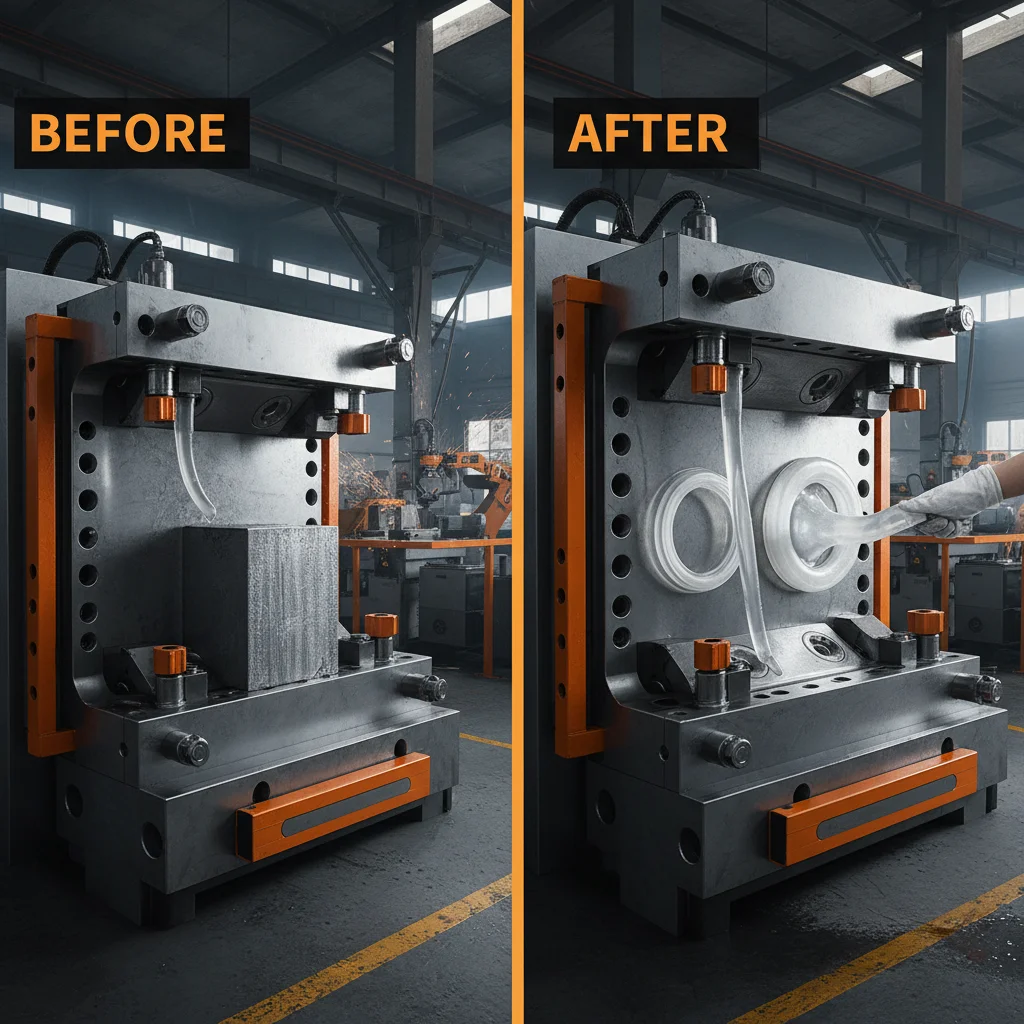
In the modern manufacturing landscape, the precision of Plastic product molds serves as the foundational pillar for producing high-quality, repeatable components across various industries. From medical-grade devices to intricate consumer electronics, the ability to merge diverse materials—such as combining rigid plastics with flexible liquid silicone—has revolutionized how products are engineered for both durability and user comfort.
The global shift toward miniaturization and multi-material integration has placed an increased demand on advanced mold design. Today, the industry is moving beyond simple cavities toward complex overmolding systems, where liquid silicone rubber (LSR) is wrapped around plastic substrates to create seamless, hygienic, and tactilely superior parts. This convergence of materials requires a sophisticated understanding of thermal expansion and chemical bonding to ensure long-term structural integrity.
Understanding the nuances of Plastic product molds is not merely a technical requirement but a strategic advantage for companies aiming to reduce cycle times and material waste. By optimizing the mold geometry and material flow, manufacturers can achieve tighter tolerances and superior finishes, ensuring that every unit meets rigorous international quality standards while maintaining cost-efficiency.

Global Relevance of Plastic product molds
On a global scale, the reliance on high-precision Plastic product molds is evidenced by the growth of the medical and automotive sectors. According to ISO standards for quality management, the consistency of a molded part is directly proportional to the thermal stability and machining accuracy of its mold. In regions like Southeast Asia and Europe, the adoption of automated injection molding has significantly reduced lead times for critical healthcare components.
The primary challenge facing the industry today is the requirement for "multi-materiality." Modern consumers demand products that are both rigid and soft, leading to the rise of liquid silicone wrapped plastic parts. Achieving this requires a mold that can handle the disparate melting points and curing times of plastic and LSR, a technical hurdle that only advanced Plastic product molds can overcome without compromising the bond between materials.
Defining Modern Molding Standards
At its core, Plastic product molds are precision-engineered tools designed to shape thermoplastic or thermosetting materials into specific geometries. However, the definition has evolved. Modern molding now encompasses "hybrid tooling," where the mold must act as both a shaping vessel for plastic and a curing chamber for liquid silicone, as seen in complex wrapped components like model YT-021206.
This evolution is deeply connected to humanitarian and medical needs. For instance, the production of biocompatible medical tubing or wearable health monitors requires molds that ensure zero contamination and absolute dimensional accuracy. A deviation of even 0.1mm can render a medical part useless, making the precision of the mold the deciding factor in product safety and efficacy.
Furthermore, the integration of LSR (Liquid Silicone Rubber) overmolding within these molds allows for the creation of parts that offer superior sealing, heat resistance, and ergonomic grip. By defining the mold's ability to manage these dual-phase materials, manufacturers can create products that are more durable and user-friendly than those made from a single material.
Core Components of Precision Molds
The effectiveness of Plastic product molds depends on several critical factors, foremost being Dimensional Stability. For a part like the YT-021206, which has a total height of 45 ± 0.5mm and a width of 10 ± 0.5mm, the mold must be constructed from high-grade steel that resists deformation under extreme pressure and temperature cycles.
Another essential aspect is Material Compatibility. When creating liquid silicone wrapped plastic parts, the mold must facilitate a chemical or mechanical bond between the green plastic core and the red silicone exterior. This requires precise gating and venting systems within the Plastic product molds to prevent air traps and ensure a seamless wrap.
Finally, Scalability and Maintainability ensure that a mold can produce thousands of identical 10g units without wear. Advanced coatings and polishing techniques are applied to the internal cavities of the mold to reduce friction during ejection, thereby extending the lifecycle of the tooling and maintaining the "exquisite" finish required for high-end products.
Strategic Performance Factors
Evaluating the success of Plastic product molds requires a data-driven approach to performance. Factors such as cycle time, scrap rate, and bonding strength determine the overall ROI of the tooling. In the case of LSR overmolding, the heating efficiency of the mold directly impacts how quickly the silicone cures, which in turn dictates the hourly output of the factory.
By analyzing different molding methods, engineers can determine the most efficient path for customized parts based on drawings and samples. Whether the priority is rapid prototyping or mass production, the choice of mold steel and cooling channel design remains the most significant variable in achieving operational excellence.
Comparative Performance of Plastic product molds Methods
Industrial Applications and Use Cases
The versatility of Plastic product molds allows them to be deployed in diverse environments. In the medical sector, these molds produce liquid silicone accessories that are hypoallergenic and autoclavable, ensuring patient safety. For instance, a part with the specifications of YT-021206 (12mm x 10mm) could serve as a precision gasket or a specialized connector in a diagnostic device.
Beyond healthcare, these molds are critical in the consumer electronics industry for producing "leather veneer products" and soft-touch buttons. In remote industrial zones or automotive assembly lines, the use of LSR overmolding accessories created by these molds provides vibration dampening and environmental sealing, protecting sensitive electronics from dust and moisture in harsh conditions.
Long-Term Value and Sustainability
Investing in high-quality Plastic product molds yields significant long-term value by reducing material waste. Precision-engineered molds minimize "flash" (excess material), which not only lowers the cost per part but also aligns with global sustainability goals to reduce plastic pollution. When a mold is designed for a 10g part with tight tolerances, the efficiency of raw material usage is maximized.
From an emotional and logical standpoint, the reliability of the mold builds trust between the manufacturer and the end-user. A product that doesn't peel, leak, or break due to a poor bond between plastic and silicone reflects a commitment to quality and innovation. This reliability is the foundation of brand dignity in the competitive "exquisite finished product" market.
Furthermore, the shift toward recyclable thermoplastics and bio-based silicones is being enabled by the adaptability of modern Plastic product molds. By adjusting the thermal profiles and pressure settings of the mold, companies can transition to greener materials without needing to completely redesign their tooling, ensuring a sustainable path forward.
Future Trends in Molding Technology
The future of Plastic product molds is being shaped by the "Industry 4.0" revolution. Smart molds, equipped with integrated sensors, can now monitor real-time pressure and temperature inside the cavity. This allows for autonomous adjustments, reducing the defect rate of complex wrapped parts and ensuring that every unit matches the 12mm x 10mm specification perfectly.
Digital transformation through AI-driven simulation is also reducing the time required for the "customized according to drawings" phase. Before a single piece of steel is cut, engineers can simulate the flow of liquid silicone around the plastic core to predict potential weak points or air pockets. This "first-time-right" approach significantly lowers the cost of developing new Plastic product molds.
Additionally, the move toward additive manufacturing (3D printing) for mold inserts is allowing for conformal cooling channels. These channels follow the exact contour of the part, enabling much faster cooling cycles than traditional straight-drilled holes. This innovation will make the production of intricate liquid silicone products faster and more energy-efficient than ever before.
Technical Analysis of Molding Dimensions and Material Properties
| Parameter Dimension |
Model YT-021206 Spec |
Mold Tolerance |
Quality Impact |
| Length Accuracy |
12 ± 0.5mm |
± 0.02mm |
Critical for fitment |
| Width Accuracy |
10 ± 0.5mm |
± 0.02mm |
Ensures seal integrity |
| Total Height |
45 ± 0.5mm |
± 0.05mm |
Alignment stability |
| Weight Control |
10g |
± 0.1g |
Material cost optimization |
| Material Bond |
Plastic + Silicone |
Chemical Bond |
Prevents delamination |
| Color Consistency |
Green + Red |
Delta E < 2.0 |
Visual branding quality |
FAQS
High-quality Plastic product molds for overmolding use precise temperature control and strategic mechanical interlocks. By heating the mold to a specific temperature during the LSR injection phase, the silicone chemically bonds to the plastic substrate, ensuring that parts like the YT-021206 do not separate under stress.
Yes, professional molding services specialize in creating Plastic product molds based on customer-provided CAD drawings or physical samples. This process involves reverse engineering and simulation to ensure the final mold produces parts that meet the exact dimensional requirements specified by the client.
The lifespan depends on the steel grade. Prototype molds may last for a few thousand cycles, while production-grade Plastic product molds made from hardened H13 or S136 steel can produce millions of parts. Regular maintenance and polishing are key to maintaining the tolerance of ± 0.5mm over time.
Weight is a proxy for volume and material consistency. In Plastic product molds, controlling the weight to 10g ensures there are no voids (bubbles) or over-filling (flash). This precision is critical for maintaining the balance and functionality of the final product.
Initial tooling for LSR-wrapped parts is generally more expensive because the Plastic product molds must handle more complex thermal cycles. However, the added value in durability, hygiene, and ergonomics often justifies the cost for high-end medical and consumer products.
The choice depends on the production volume and part complexity. For high-precision, long-term use, stainless steel or hardened tool steel is recommended. For short runs, aluminum molds can be used. Experts in Plastic product molds will suggest the material based on your specific tolerance needs (e.g., ± 0.5mm).
Conclusion
The integration of precision Plastic product molds is fundamental to the success of multi-material manufacturing. By mastering the balance between rigid plastics and flexible liquid silicone, as demonstrated by the YT-021206 model, manufacturers can deliver products that excel in both technical performance and user experience. The core value lies in the intersection of dimensional accuracy, material science, and sustainable production practices.
Looking ahead, the adoption of smart tooling and AI simulation will further refine the efficiency of these molds, making customization faster and waste virtually non-existent. For businesses seeking to elevate their product quality from standard to "exquisite," investing in high-tier molding technology is no longer optional—it is the primary driver of competitive advantage. Visit our website for professional solutions: www.ytlsrmold.com