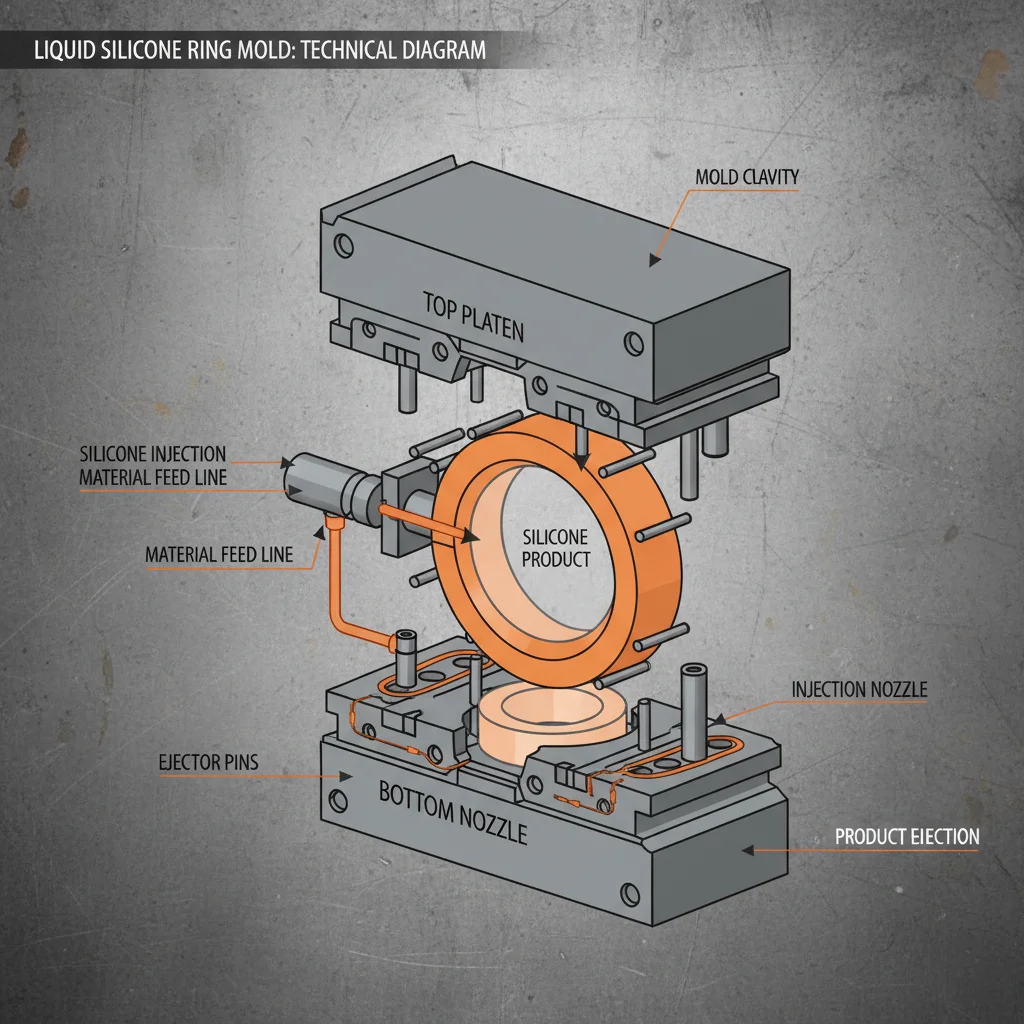
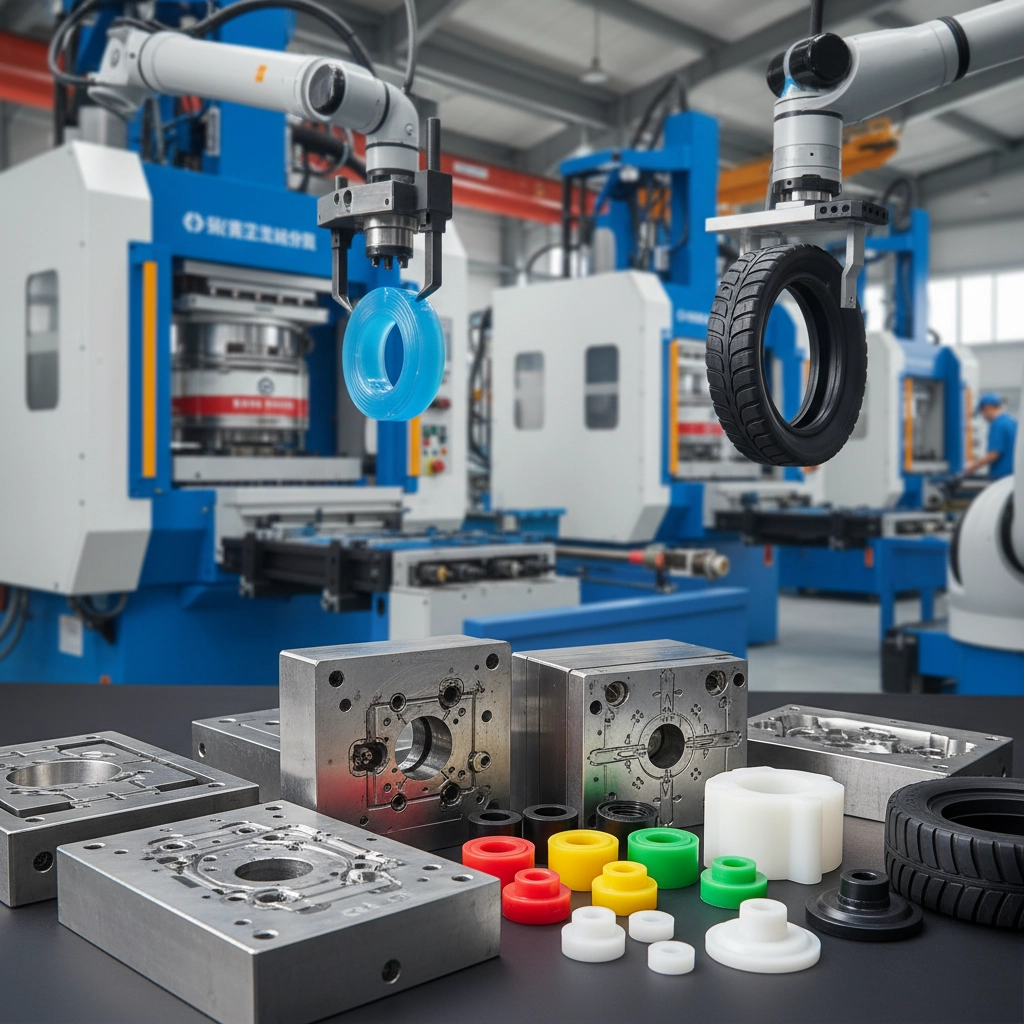
When designing high-precision medical or industrial components, the integrity of the sealing mechanism often determines the success of the entire device. A Liquid silicone waterproof product mold must balance extreme dimensional accuracy with the inherent flexibility of the material to prevent leakage and contamination. For specialized components like respiratory throat masks, these molds are not merely containers but precision-engineered tools that ensure patient safety through consistent wall thickness and airtight seals.
The complexity of Liquid Injection Molding (LIM) requires a deep understanding of how Liquid Silicone Rubber (LSR) behaves under heat and pressure. Unlike traditional molding, these processes demand molds that can withstand rapid thermal cycling while maintaining tolerances as tight as ± 0.5mm. This precision is critical for integrating LSR components with other materials, such as in overmolding applications, where the bond between silicone and plastic must be absolute to achieve true waterproof certification.
Achieving this level of consistency requires a vertically integrated manufacturing approach, combining advanced mould processing with intellectual manufacturing systems. By focusing on the synergy between mold material selection and precision machining, engineers can eliminate common defects like flash or air traps. For those seeking a reliable Liquid silicone waterproof product mold, understanding the technical intersection of material science and tooling precision is the first step toward high-yield production.


Liquid silicone molding differs fundamentally from thermoplastic injection because the material is thermosetting. The mold must not only shape the material but also act as a heat exchanger to trigger the vulcanization process. For a high-precision component like the YT-021305-3 respiratory throat mask mold, the internal geometry must be perfectly calibrated to ensure the liquid silicone flows evenly into every cavity, preventing voids that could compromise the waterproof seal.
The construction of these molds typically involves high-grade metal materials, such as stainless steel or specialized aluminum alloys, chosen for their thermal conductivity and resistance to corrosion. In medical-grade production, the mold surface finish is paramount; any micro-imperfections can lead to stress concentrators in the final silicone part, potentially causing premature failure during clinical use. The integration of a complete industry chain, from initial mold development to finished product, ensures that these technical requirements are met consistently.
The first critical factor is the selection of mold materials. While aluminum alloys offer excellent heat transfer for faster cycle times, steel materials are preferred for long-term durability and extreme precision. For products requiring strict dimensions, such as a laryngeal mask with a diameter of 4 ± 0.5mm, the mold must resist deformation under the high clamping pressures of LSR machines. This material stability ensures that every part produced is identical to the last, reducing scrap rates significantly.
Thermal management is the second pillar of yield optimization. Because the vulcanization of liquid silicone is temperature-dependent, uneven heating across the mold surface can lead to "under-cure" or "over-cure" zones. This results in inconsistent hardness and potential leaking in waterproof products. Precision-engineered molds utilize optimized cooling and heating channels to maintain a uniform temperature profile, ensuring the elastomer's physical properties are homogenous throughout the component.
Finally, the venting strategy determines the final surface quality. Liquid silicone is highly viscous and can trap air easily. An improperly vented mold will result in air bubbles or "burns" on the product. By implementing vacuum-assisted venting and precision-calculated overflow channels, manufacturers can ensure that the silicone fully occupies the cavity, creating a dense, seamless waterproof barrier that meets rigorous medical or industrial standards.
Investing in high-precision tooling transforms the production workflow from a process of "correction" to one of "execution." When a mold is engineered for high consistency, the need for post-production trimming and manual inspection is drastically reduced. This is especially vital for small-scale, complex parts where manual intervention could introduce contamination or dimensional errors, thereby increasing the overall reliability of the final waterproof assembly.
The core value of high-consistency molds lies in the reduction of Total Cost of Ownership (TCO). By eliminating variance in part weight—such as maintaining a strict ~8g for a laryngeal mask—manufacturers reduce material waste and ensure that every part fits perfectly into its housing without leakage, directly impacting the end-user's safety and product longevity.
Furthermore, consistent tooling facilitates a seamless transition from prototyping to mass production. When the mold is developed using a precision intellectual manufacturing system, the "first-shot" success rate increases. This allows companies to bring critical waterproof accessories to market faster, as the gap between the design drawing and the physical product is minimized through rigorous mould processing and advanced testing instruments.
Evaluating the performance of a liquid silicone mold requires looking beyond simple output numbers. Engineers analyze the relationship between cycle time, dimensional drift, and material waste. A superior mold maintains its tolerances over hundreds of thousands of cycles, ensuring that the product dimensions, such as a total height of 50 ± 0.5mm, do not shift as the tooling wears down.
The following data represents a relative comparison of performance metrics when utilizing standard tooling versus precision-engineered intelligent manufacturing systems. This comparison highlights how precision in the mold development phase directly correlates with the quality and efficiency of the finished LSR silicone product.
Waterproof liquid silicone components are indispensable in environments where moisture or biological fluids can cause system failure. In the medical field, laryngeal masks must provide a perfect seal to ensure airway management without leakage, requiring the mold to produce a smooth, non-irritating surface in a specific skin tone. The precision of the mold ensures that the 17 ± 0.5mm width is maintained to fit anatomical requirements perfectly.
Beyond medical use, these molds are critical for the consumer electronics and new energy vehicle sectors. Whether it is an electronic seal for a smart wearable or a waterproof gasket for a communication device, the LSR overmolding process allows for a permanent bond between silicone and plastic. This creates a robust barrier against water and dust, which is essential for devices operating in harsh industrial environments or exposed to the elements.
The shift toward "Precision Intelligent Manufacturing" has redefined how LSR products are created. By integrating 55 sets of liquid silicone moulding machines with automated testing instruments, the production process becomes a closed-loop system. Data from the testing phase is fed back into the mould processing equipment to make micro-adjustments, ensuring that the final product consistently meets the customized drawings and samples provided by the customer.
This evolution allows for greater flexibility in customization. For example, the ability to offer customizable colors (black, white, gray, red, blue) without altering the physical properties of the silicone requires precise control over the material mixing and molding temperature. Intelligent systems manage these variables automatically, reducing the risk of human error and ensuring that aesthetic choices do not compromise the waterproof integrity of the part.
As the industry moves forward, the integration of the entire chain—from mold development to the finished product—will become the standard. This synergy allows for the creation of high-precision elastomer parts that can withstand the demands of new energy vehicles and smart wearable technology, pushing the boundaries of what is possible in silicone product manufacturing.
One of the most persistent challenges in LSR molding is the occurrence of "flash"—excess material that leaks from the parting line of the mold. This is typically caused by inadequate clamping pressure or wear on the mold surfaces. The solution lies in utilizing high-precision mould processing equipment to ensure a perfect seal between the mold halves, coupled with the use of steel materials for critical sealing surfaces.
Another common issue is inconsistent curing, which can lead to "soft spots" in the waterproof seal. This is often a result of poor thermal distribution. By redesigning the mold with advanced conformal cooling channels and using high-conductivity aluminum alloys in specific areas, engineers can ensure that the heat is distributed evenly, leading to a consistent cure throughout the part's geometry.
Finally, the challenge of material contamination in medical-grade products is addressed through strict quality control and the use of medical-grade liquid silicone. Ensuring that the mold is cleaned using validated processes and that the production environment is controlled prevents particulates from becoming embedded in the silicone, which is essential for respiratory products that come into direct contact with patients.
| Feature | Standard Mold | Precision Mold | Impact on Product |
|---|---|---|---|
| Dimensional Tolerance | ± 1.0mm | ± 0.5mm | Seal Integrity |
| Thermal Distribution | Uneven | Homogeneous | Cure Consistency |
| Surface Finish | Rough/Standard | Mirror/High-Polish | Biocompatibility |
| Cycle Time | Longer | Optimized | Production Cost |
| Tool Life | Moderate | High (Steel) | Part Uniformity |
| Flash Rate | Higher | Minimal | Post-Processing |
LSR (Liquid Silicone Rubber) molds are designed for a thermosetting process where the material is injected in liquid form and cured using heat. Unlike standard solid silicone molding, which often uses compression or transfer molding, LSR tooling requires high-precision cavities and integrated heating systems to trigger rapid vulcanization, allowing for much tighter tolerances and higher production speeds.
A waterproof seal is ensured by combining precision mold machining with optimized venting. By eliminating air traps and ensuring that the material fully fills the cavity without voids or flash, the final part achieves a seamless, dense structure. For overmolded parts, the bond between the silicone and the substrate is critical, which is achieved through specific surface treatments and precise thermal control during the injection process.
For medical-grade components like respiratory masks, high-grade stainless steel or specialized aluminum alloys are best. Steel provides the durability and surface hardness needed to maintain critical dimensions (like the 4mm diameter of a laryngeal mask) over long production runs, while aluminum offers the thermal conductivity necessary for consistent curing and faster cycle times.
Yes, professional manufacturers can create customized molds based on provided drawings or physical samples. This process involves reverse engineering the sample to determine the exact dimensions and material properties, then designing a mold that replicates those specifications while optimizing the geometry for the liquid injection molding process to ensure consistent quality.
Mold precision directly controls the volume of the cavity. In parts where weight is a key specification—such as an 8g laryngeal mask—even a minor deviation in wall thickness can cause the weight to fluctuate. High-precision tooling ensures that the cavity volume remains constant across every shot, resulting in highly consistent part weights and physical properties.
Low-quality tooling often leads to high scrap rates due to flash, air bubbles, and dimensional instability. In waterproof applications, these defects can lead to catastrophic failure of the seal. Additionally, poor thermal management in cheap molds can result in inconsistent curing, compromising the elasticity and longevity of the silicone part, which is especially dangerous in medical or industrial safety components.
The success of any waterproof elastomer component depends on the precision of the tooling used to create it. From the rigorous dimensional requirements of medical respiratory masks to the durable sealing needs of new energy vehicles, the Liquid silicone waterproof product mold serves as the foundation for quality. By integrating advanced material selection, precise thermal management, and an intellectual manufacturing system, producers can ensure that every part provides a reliable, airtight seal that meets the highest industry standards.
For organizations requiring high-precision elastomer solutions, partnering with a manufacturer that controls the entire chain—from mold development to final product—is the most effective way to mitigate risk and ensure consistency. To learn more about high-precision LSR tooling and customized silicone solutions, you can explore the capabilities available at www.ytplasticmold.com for professional guidance on your next project.