Professional Manufacturer of twocolor plastic parts for processing
Achieving a seamless integration of diverse material properties within a single component is a critical requirement for modern high-performance electronics and automotive systems. For engineers designing New Energy Vehicle (NEV) connectors, the challenge lies in combining the structural rigidity of plastics with the environmental sealing capabilities of liquid silicone rubber (LSR). This intersection of materials is where precision overmolding becomes essential, ensuring that connectors can withstand extreme vibration, temperature fluctuations, and moisture ingress without compromising signal integrity.
Whether utilizing LSR silicone, PP, ABS, or metal substrates, the ability to execute complex encapsulation processes allows for the creation of components that are not only waterproof but also electrically insulated. By focusing on the technical synergy between injection molding and silicone encapsulation, manufacturers can provide high-consistency elastomer parts that meet the stringent safety standards of the EV industry. This approach eliminates the need for secondary assembly, reducing failure points and improving the overall reliability of the vehicle's electrical architecture.

Advanced Encapsulation Technologies for New Energy Vehicle Connector Systems
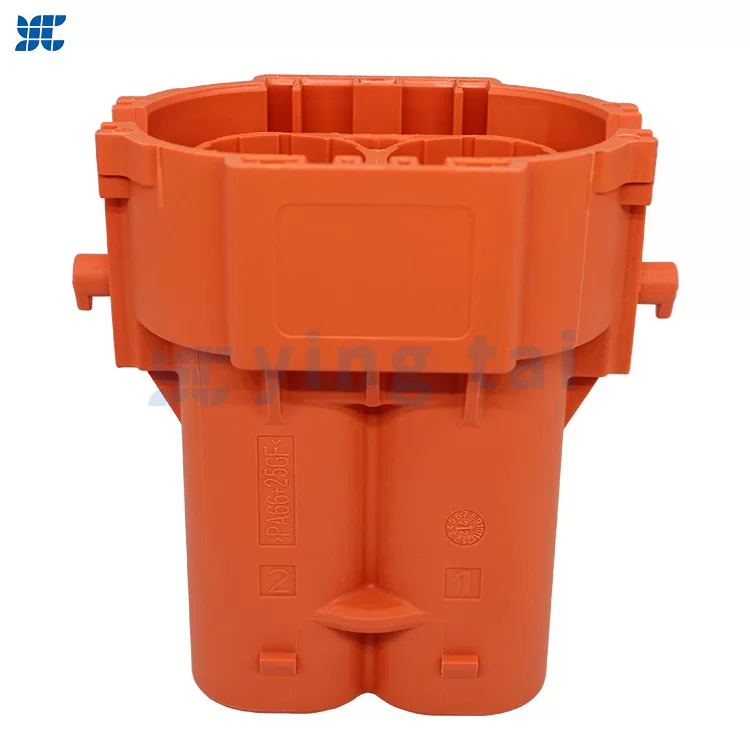
The production of high-end NEV connectors requires a sophisticated blend of manufacturing techniques to ensure a perfect bond between the hardware and the sealing layer. Liquid silicone injection molding is primarily employed for its superior flow characteristics, allowing the elastomer to penetrate intricate geometries and provide a hermetic seal around metal pins and plastic housings. This process is vital for components like the YT-021314-4 model, where precise tolerances are required to maintain waterproof ratings in harsh outdoor environments.
Beyond simple sealing, the integration of hardware encapsulation allows for the direct bonding of silicone to metal or thermoplastic substrates. This is achieved through specialized overmolding processes where the primary part—often made of ABS or PP—is placed into a mold and the LSR is injected around it. The resulting bond is mechanical and chemical, preventing the sealant from peeling away under thermal stress. For automotive applications, this ensures that the connector remains stable across a wide temperature range, preventing leaks that could lead to short circuits in high-voltage systems.
LSR Encapsulation: Provides exceptional flexibility, thermal stability, and biocompatibility for sensitive electronic interfaces.
Injection Molding: Ensures high dimensional stability and structural strength for the connector's main body.
Hardware Integration: Facilitates the seamless marriage of conductive metals with insulating elastomers.

Engineering Material Selection for High-Consistency Elastomer Parts
Selecting the correct material matrix is the foundation of any successful precision part. For connectors used in the automotive sector, the materials must offer a balance of dielectric strength, chemical resistance, and mechanical durability. LSR (Liquid Silicone Rubber) is the preferred choice for encapsulation due to its ability to maintain elasticity at low temperatures and resist degradation under UV exposure. When paired with engineering plastics like ABS or PE, the resulting part gains the necessary rigidity to withstand mechanical mating forces while retaining a soft, sealing interface.
The technical complexity increases when integrating metal inserts. The thermal expansion coefficients of metal and silicone differ significantly; therefore, the molding process must be carefully controlled to avoid internal stresses that could cause cracking or deformation. By utilizing advanced testing instruments and precise mold processing equipment, it is possible to achieve a high-consistency finish where the material transition is smooth and the dimensional accuracy is maintained according to 2D and 3D technical drawings.
Customization is a key driver in this sector. From adjusting the hardness (Shore A) of the silicone to selecting flame-retardant plastic grades for the housing, each specification is tailored to the specific electrical load and environmental exposure of the end-use case. This level of detail ensures that every part produced is optimized for its specific role within the vehicle's electronic ecosystem.
Strategic Application Scenarios in Smart Wearables and Industrial Electronics
While NEV connectors are a primary focus, the capabilities of a professional Manufacturer of two-color plastic parts for processing extend into several other high-growth industries. In the realm of smart wearables, the requirement for skin-friendly materials combined with waterproof electronic housings makes LSR overmolding indispensable. Components must be compact yet robust, requiring the high-precision capabilities of liquid silicone molding machines to create intricate seals in miniature footprints.
Industrial electronic appliances and home automation systems also rely on these customized solutions to protect internal circuitry from dust and moisture. For example, in communication equipment, the use of overmolded waterproof seals prevents signal interference and protects hardware from oxidation. The ability to customize color—ranging from standard black and gray to specific brand colors—allows these technical parts to integrate seamlessly into the aesthetic design of consumer electronics without sacrificing performance.
The shift toward intelligent manufacturing means that these parts are no longer produced as standalone items but as part of an integrated supply chain. From initial mold development to the finished product, the use of automated injection molding machines ensures that thousands of units can be produced with zero variance, which is essential for global brands requiring strict quality control across different production batches.
Technical Specification and Material Compatibility Matrix
| Material Type | Processing Method | Key Performance Attribute | Typical Application |
|---|---|---|---|
| LSR Silicone | Liquid Injection Molding | High Elasticity & Sealing | Waterproof Seals / Gaskets |
| ABS / PP / PE | Automatic Injection Molding | Structural Rigidity | Connector Housings / Frames |
| Metal Inserts | Overmolding / Encapsulation | Conductivity & Strength | Electrical Terminals / Pins |
| Hybrid Elastomers | Two-Shot Molding | Multi-functional Interface | Soft-touch Grips / Buttons |
| Custom Compounds | Hydraulic Press Molding | Specific Hardness/Color | Industrial Protective Boots |
Evaluating Supplier Capabilities for Precision Intelligent Manufacturing
When sourcing high-precision elastomer components, procurement managers must look beyond the unit price and evaluate the entire production ecosystem. A benchmark enterprise is characterized by its vertical integration—the ability to handle everything from mold design and processing to final testing in-house. This reduces the risk of communication errors between the mold maker and the molder, which is often the primary cause of dimensional inaccuracies in complex encapsulated parts.
Quality consistency is driven by the equipment fleet. The availability of numerous sets of automatic plastic injection molding machines and liquid silicone molding machines allows for scalable production without sacrificing precision. Furthermore, the presence of advanced testing instruments ensures that every batch is verified against the original 3D drawings, confirming that the height, width, and diameter meet the specified tolerances. For high-stakes industries like NEV, this level of verification is non-negotiable for safety certifications.
Finally, the expertise of the technical team plays a decisive role. A professional team capable of providing customized solutions can guide the client through material selection and design optimization, potentially reducing mold complexity and lowering overall production costs. This collaborative approach turns a simple supplier relationship into a strategic partnership, ensuring that the final product is optimized for both manufacturability and end-use performance.
Future Trends in High-Precision Elastomer and Plastic Integration
The trajectory of the silicone and plastic industry is moving toward smarter materials and more automated processes. We are seeing a rise in the demand for conductive silicones and flame-retardant plastics that can handle higher voltages in the next generation of electric vehicles. As NEV architectures evolve, the need for more compact, integrated connector modules will push the boundaries of liquid silicone encapsulation, requiring even tighter tolerances and more complex multi-material molds.
Sustainability is also becoming a core requirement. The industry is shifting toward recyclable thermoplastics and bio-based elastomers that maintain the high-performance characteristics of traditional materials. For the Manufacturer of two-color plastic parts for processing, this means investing in new material research and upgrading machinery to handle a wider variety of sustainable resins without losing the precision that the market demands.
The integration of AI and data analytics into the production workshop—often referred to as "Intelligent Manufacturing"—will further minimize waste and maximize consistency. By monitoring molding parameters in real-time, factories can predict potential defects before they occur, ensuring that every part delivered to the customer is a perfect replica of the engineering prototype. This evolution will be critical for maintaining competitiveness in the global high-precision components market.
Technical FAQ regarding Precision Molded Connectors
What is the difference between liquid silicone injection molding and solid silicone molding?
Liquid silicone injection molding (LSR) uses a low-viscosity material injected at high speed into a heated mold, allowing for extremely complex geometries and high precision. Solid silicone molding typically involves hydraulic presses and pre-formed slugs, which is better suited for larger, simpler parts with less intricate detail.
Can you customize the hardness and color of the encapsulation material?
Yes, the hardness (Shore A) and color are fully customizable. We can provide materials in black, white, gray, or any specific color requested, and the hardness can be adjusted to meet the specific sealing or tactile requirements of your application based on provided drawings.
How do you ensure the bond between the plastic housing and the silicone seal?
We use advanced overmolding techniques and material compatibility analysis. By controlling the mold temperature and utilizing specific primers or mechanical interlocks in the design, we create a high-strength bond that prevents delamination during thermal cycling or mechanical stress.
What documentation is required to start the customization process?
To ensure accuracy, we require 2D and 3D drawings (such as STEP or IGS files). These drawings should specify dimensions, tolerances, material requirements, and any critical functional areas that require specific sealing or strength characteristics.
Which materials are most suitable for NEV connector encapsulation?
The most common combination is LSR (Liquid Silicone Rubber) for the sealing layer due to its temperature resistance and elasticity, paired with engineering plastics like ABS, PP, or PE for the structural housing to provide impact resistance and stability.
How do you manage quality control for high-volume orders?
We employ an intelligent manufacturing system with strict quality control checkpoints. This includes the use of advanced testing instruments to verify dimensions and functional tests to ensure the waterproof integrity of the encapsulation for every batch.
Technical Industry References
For professional guidance on developing your next-generation connector or to request a technical evaluation of your 3D drawings, our engineering team is available to provide customized high-precision solutions tailored to your industry's specific requirements.
Industry Insights and Related Solutions